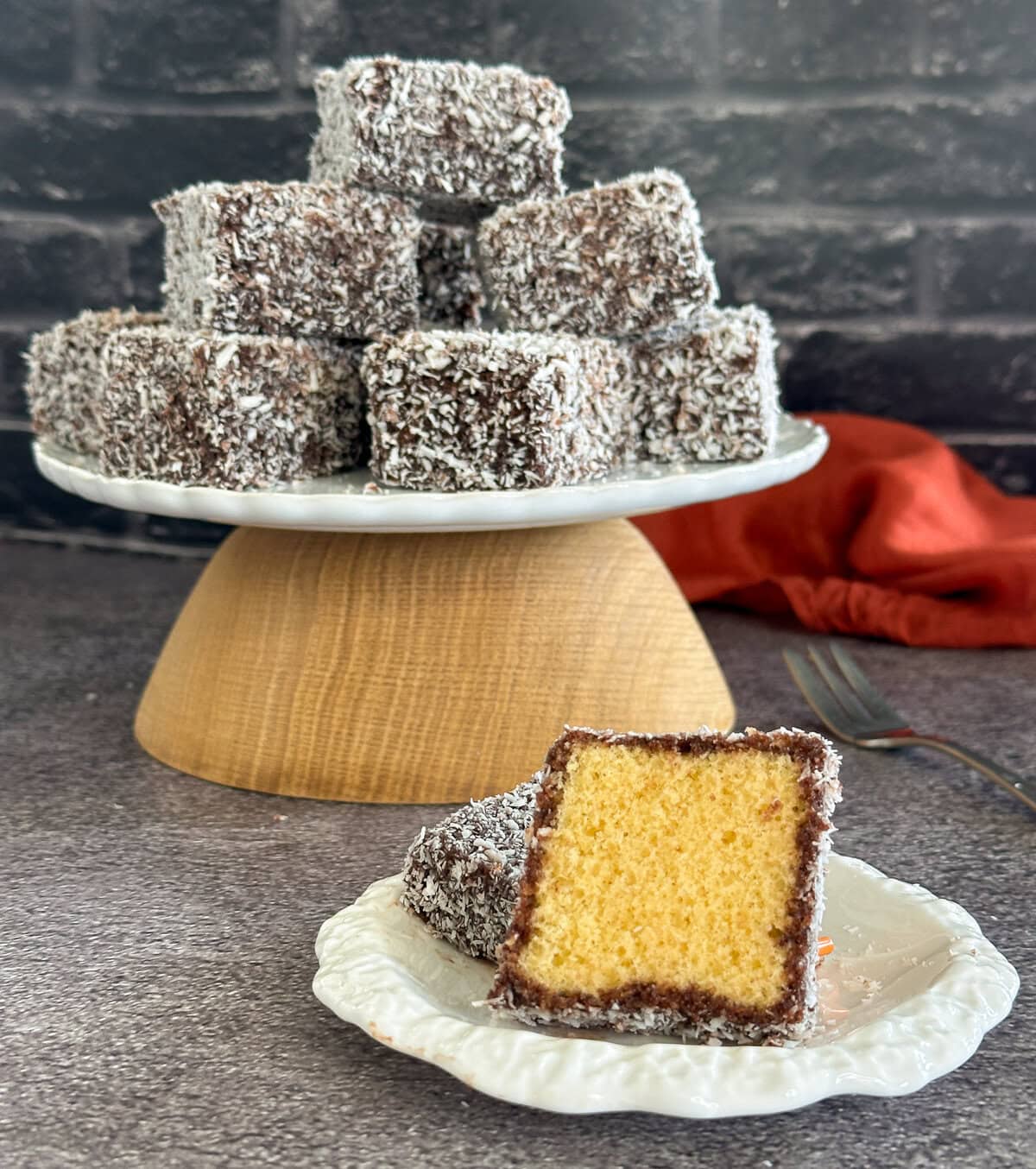
I am delighted to bring you the ideal sponge recipe for lamingtons and trifles. It is the perfect balance of a light, delicious sponge with a texture that springs back to the touch, absorbs liquids well and, most importantly, holds its shape while being cut and dipped!
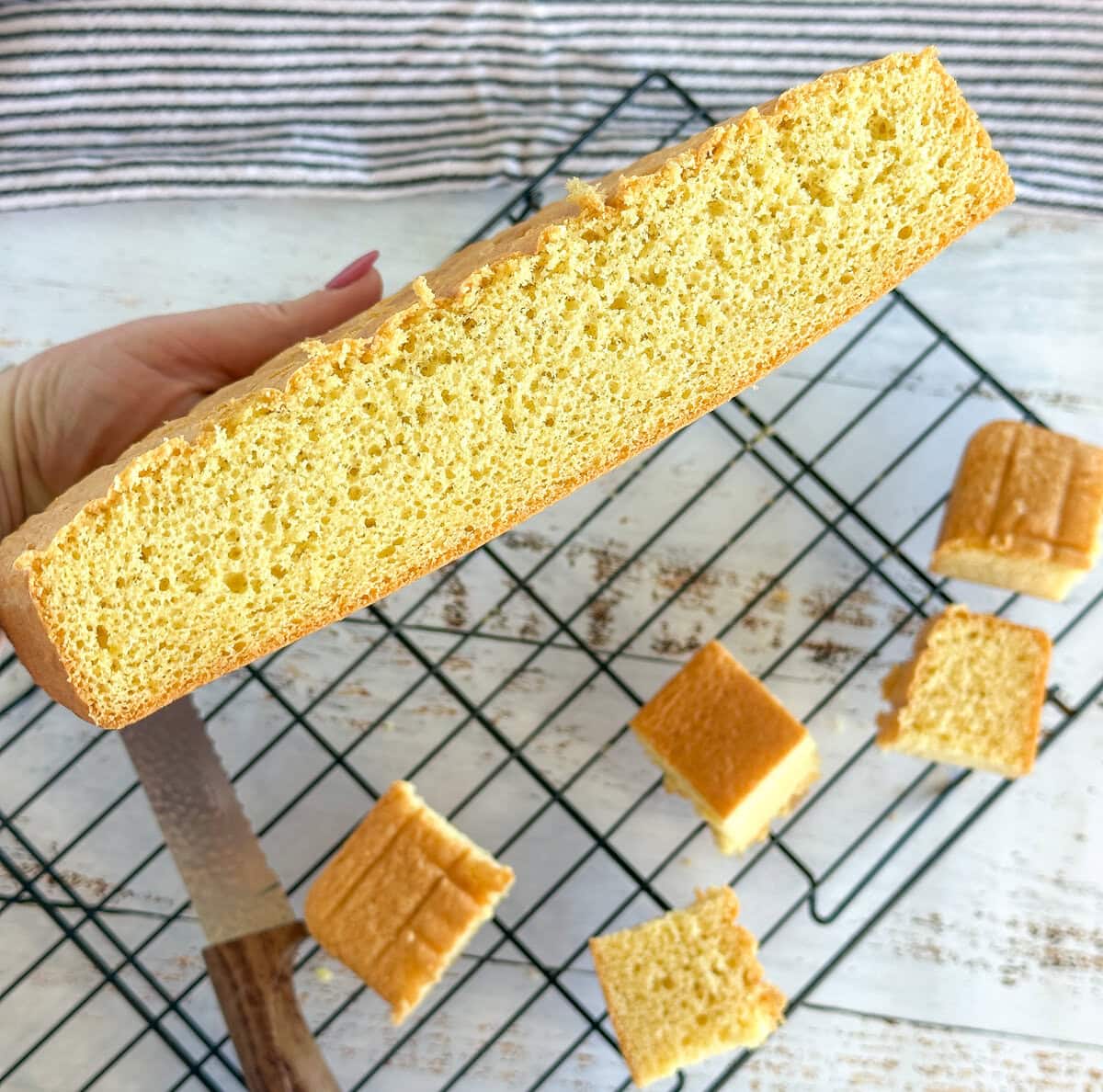
I have wanted to create a sponge recipe for lamingtons and trifles for years. Usually I resort to store-bought ones as they are the perfect texture. My Easy Sponge Recipe is absolutely delicious, light, fluffy and perfect sandwiched with cream and berries.
A sponge used for lamingtons and trifles needs to stand up to a lot more handling, cutting, dipping, layering and chilling, while still holding it’s shape. This recipe does all of that!
I tested a few variations to get it exactly right. First, I wanted to understand what makes a supermarket sponge different from the ones we make at home. That peeling top layer of skin was my first clue! It was a matter of working out what gave a sponge that particular texture.
The next step was making sure the flavour was good while still being up to the task!
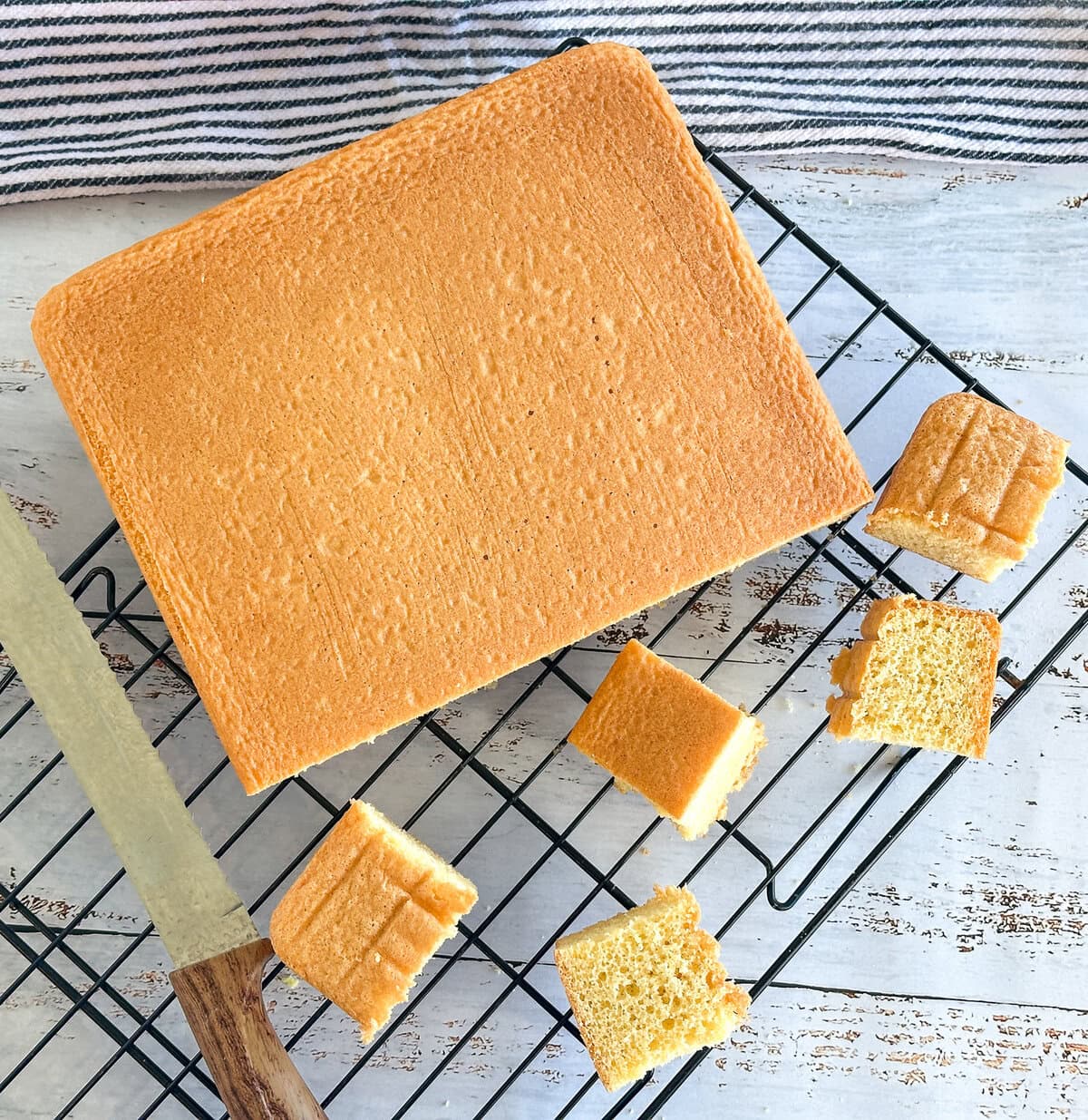
What makes a good sponge for lamingtons and trifles?
The key to a really good lamington and trifle sponge comes down to the techniques and ingredients. I found the best results came from whipping lots of eggs really well, getting the sugar-to-egg ratio just right, and then lightly folding in the dry ingredients. It uses just a few simple pantry ingredients, but they all do a really specific job.
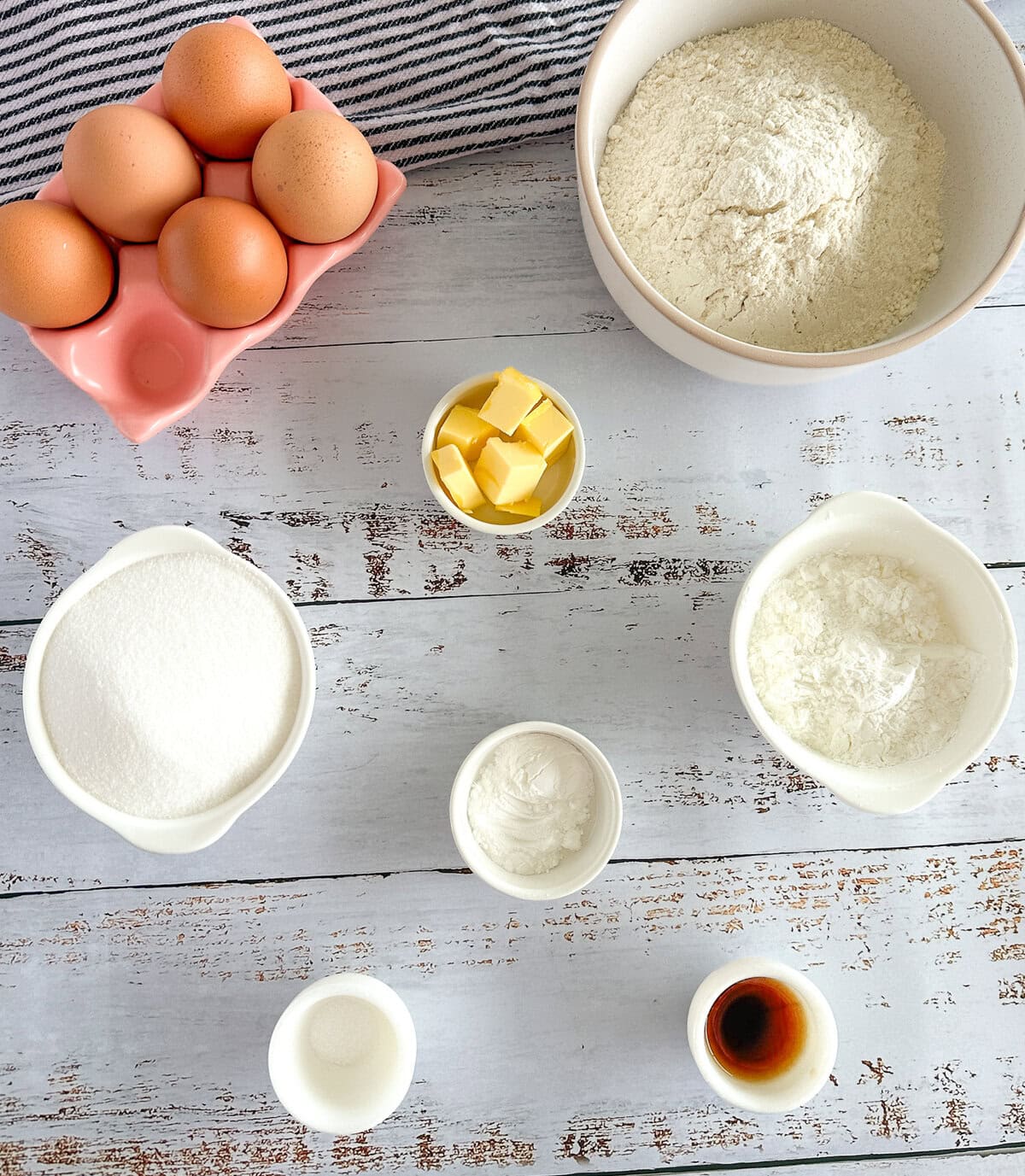
Ingredients for this sponge cake
Eggs are the main ingredient here. I use five fresh large size 7 eggs, at room temperature. They provide much of the structure and height for the sponge. My eggs are around 63 grams with the shell, so if you want to ensure you are on the right track, weigh your eggs before you start.
Then you will see I use caster sugar because it has a lovely fine texture that dissolves well into the eggs.
I use both flour and cornflour. Adding the cornflour helps to lighten the crumb a little and give that lovely final crumb texture we are after. If you are looking for a gluten-free alternative try my Gluten Free Sponge for Lamingtons and Trifles.
You will see there is only a small amount of butter, this style of sponge is low in fat. It’s just there to help a little with the flavour and tenderness of the finished result.
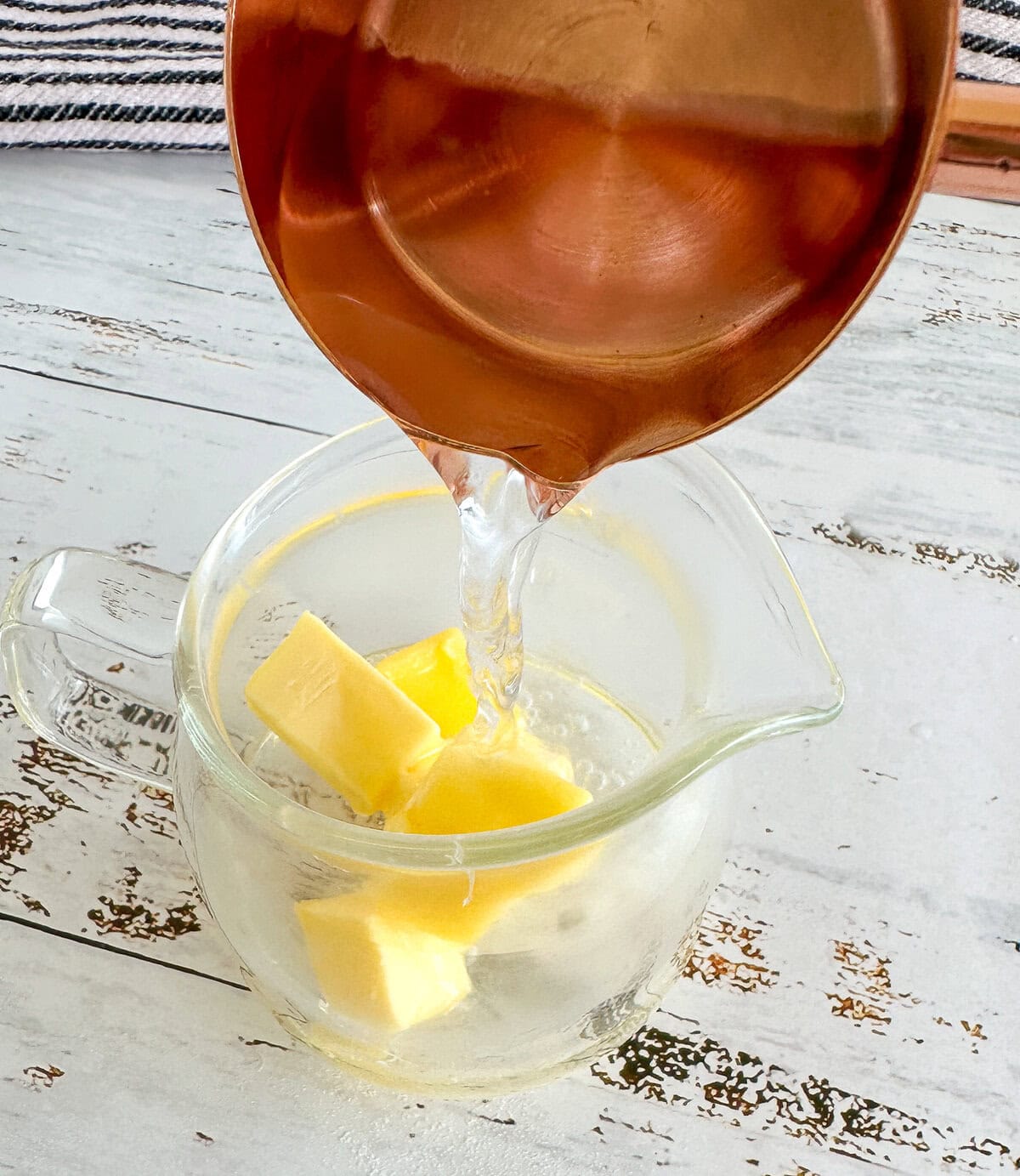
The boiling water melts the small amount of butter, and keeps the mixture warm so it can easily be folded into the batter.
The baking powder gives you a little lift and the vanilla and salt are there for flavour.
How to Make Sponge Cake for Lamingtons and Trifles
With just a few simple ingredients, the technique for this recipe is really important. I use a stand mixer for the initial stages or electric handheld beaters will work well.
Prepare the Tin
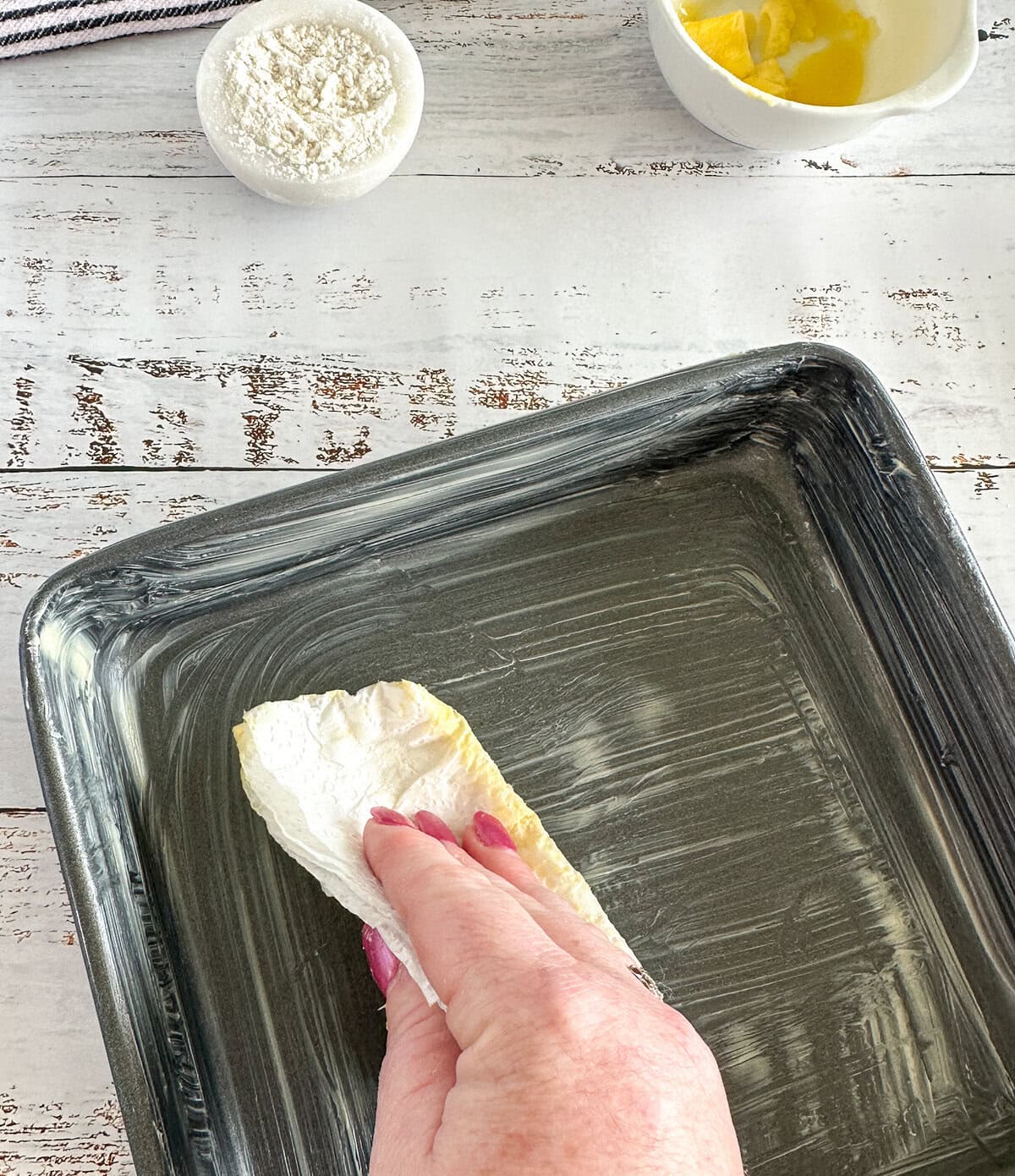
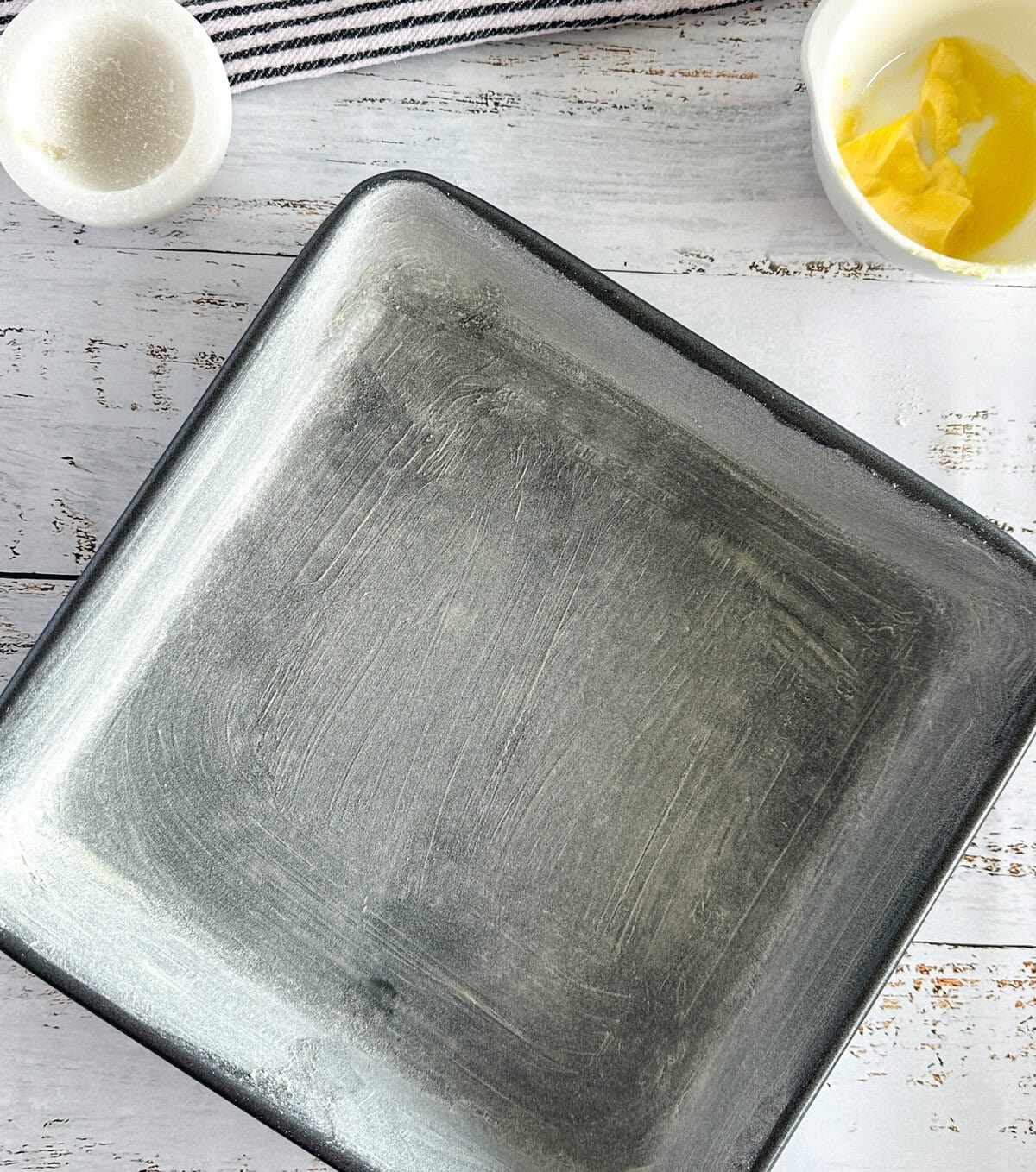
The first step is preparing the baking tin. I use a 23 cm square tin for this. I spread softened butter with a paper towel around the inside of the tin, ensuring every corner and surface is covered. Then I use a tablespoon or two of flour, and spread this around by holding the tin at various angles (over the kitchen sink) and tapping it on one side at a time to dust the surface. Tip out the excess.
Sift the Dry Ingredients
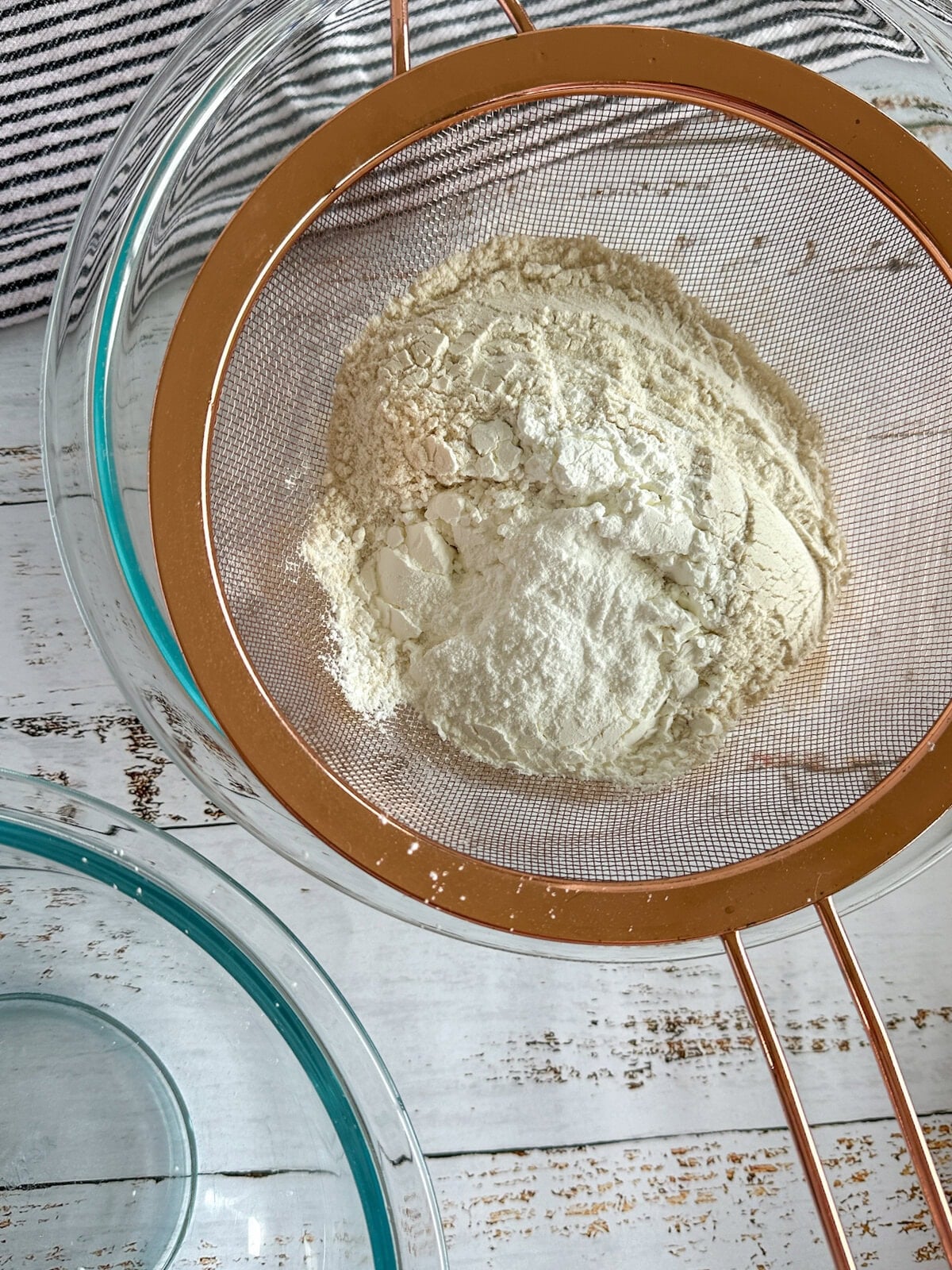
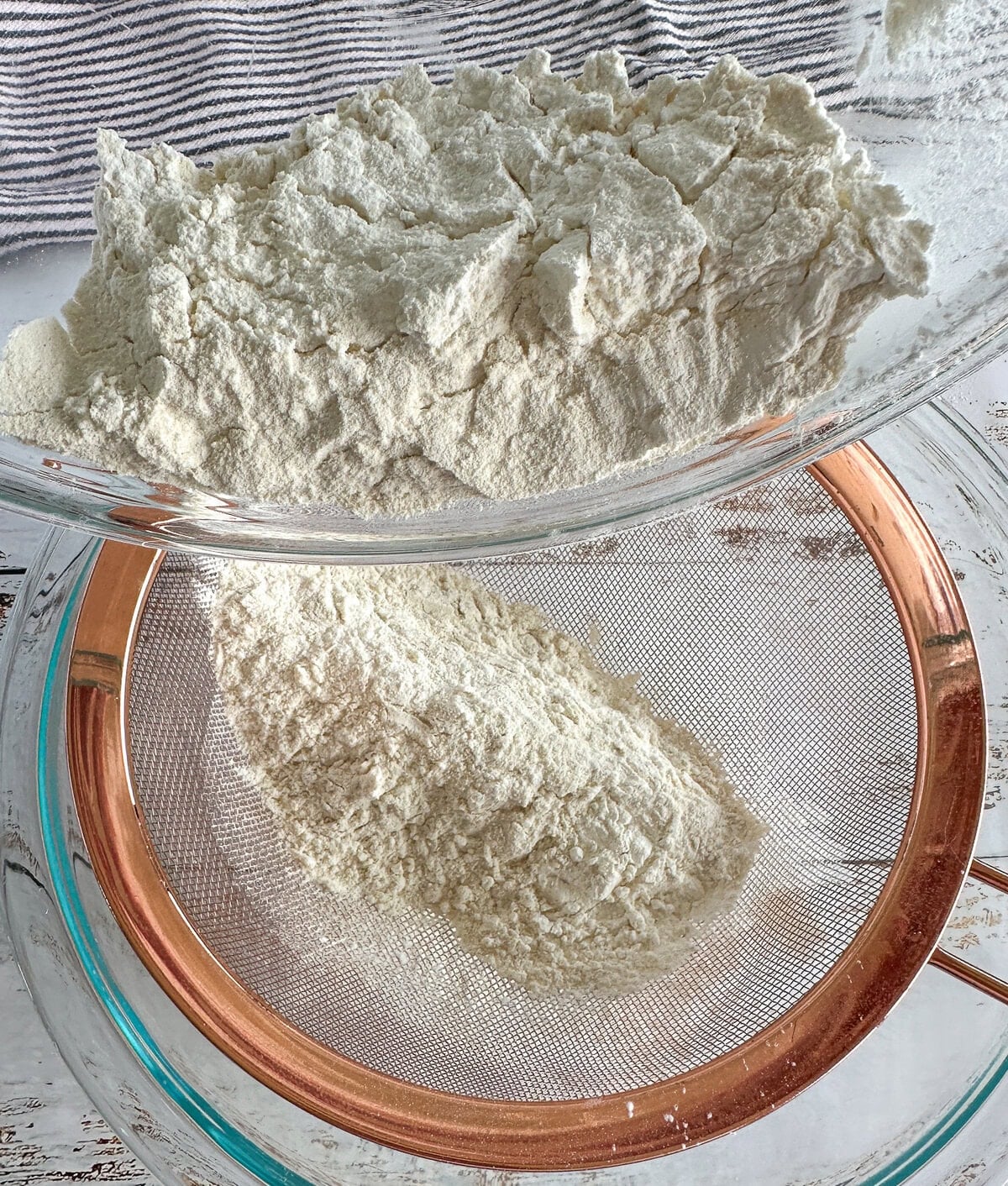
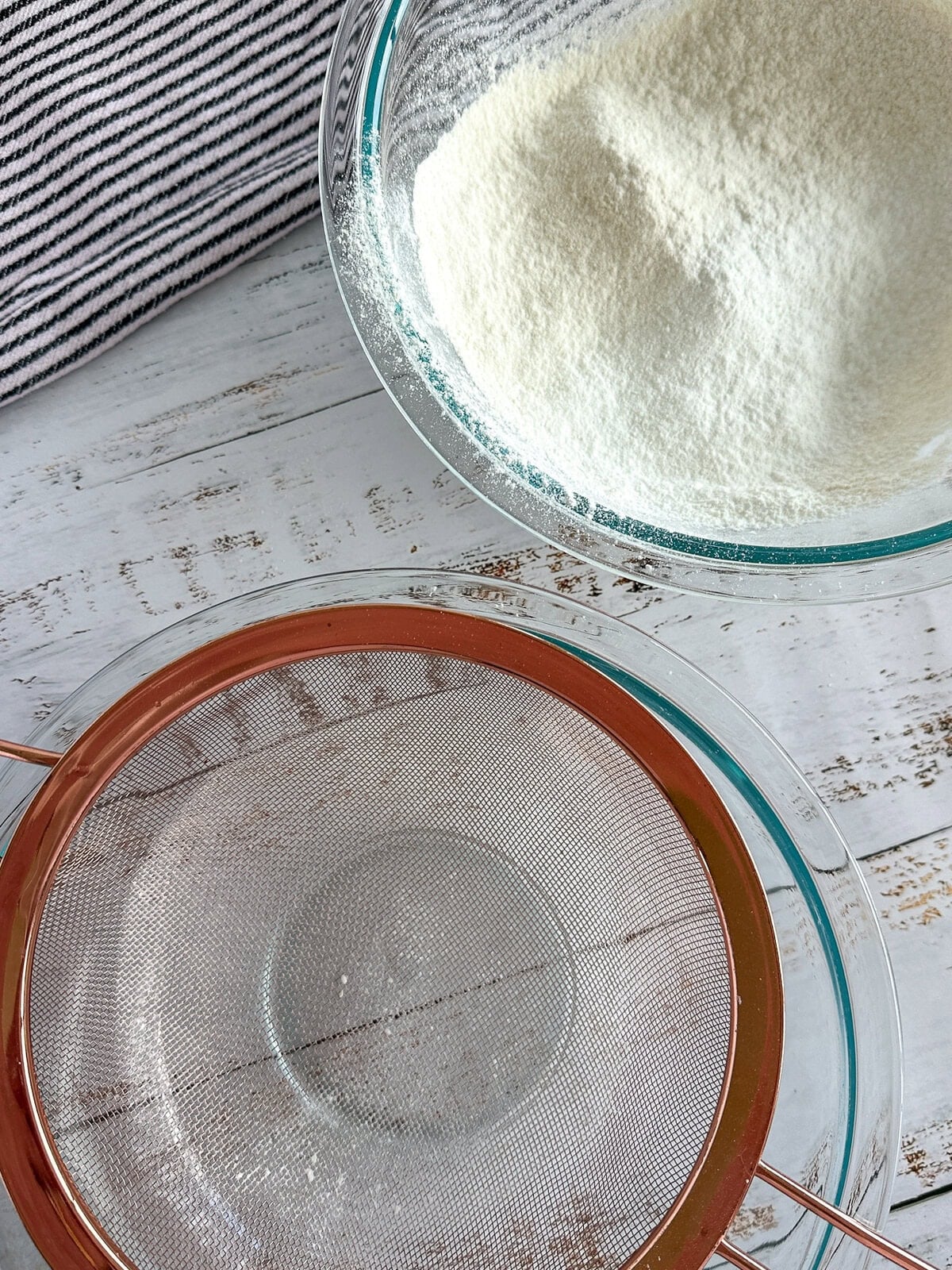
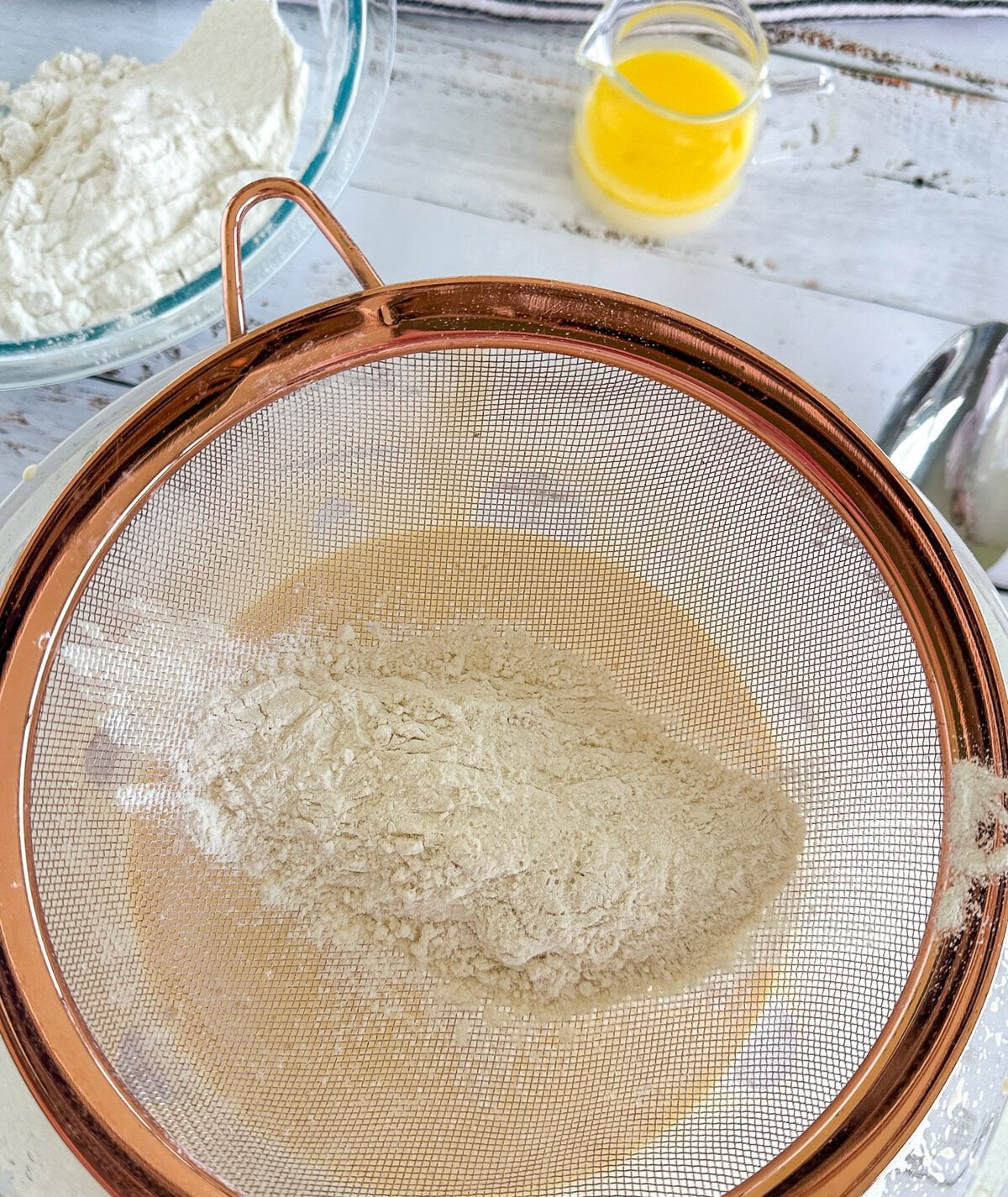
You will note that I triple sift the dry ingredients as the first step, I do that for all of my sponges. This ensures that the flour, cornflour and baking powder are well combined when folded in. I then sift it one further time when added to the egg mixture.
Whisk the Eggs and Sugar
The initial step of whisking the eggs is the most important. You want to take your time here and watch out for visual cues a bit more than just the timing I say here.
I use a whisk attachment on my stand mixer, initially whisking the whole eggs until they are starting to become aerated, then slowly drizzle in the caster sugar over the next few minutes. That gives time for the caster sugar to incorporate and it makes it easier to dissolve.
Then you will whisk that on medium-high speed until the eggs and sugar are very pale and thick, and when you lift the whisk the mixture should leave a thick ribbon that stays visible for a few seconds.
Fold in the Dry Ingredients
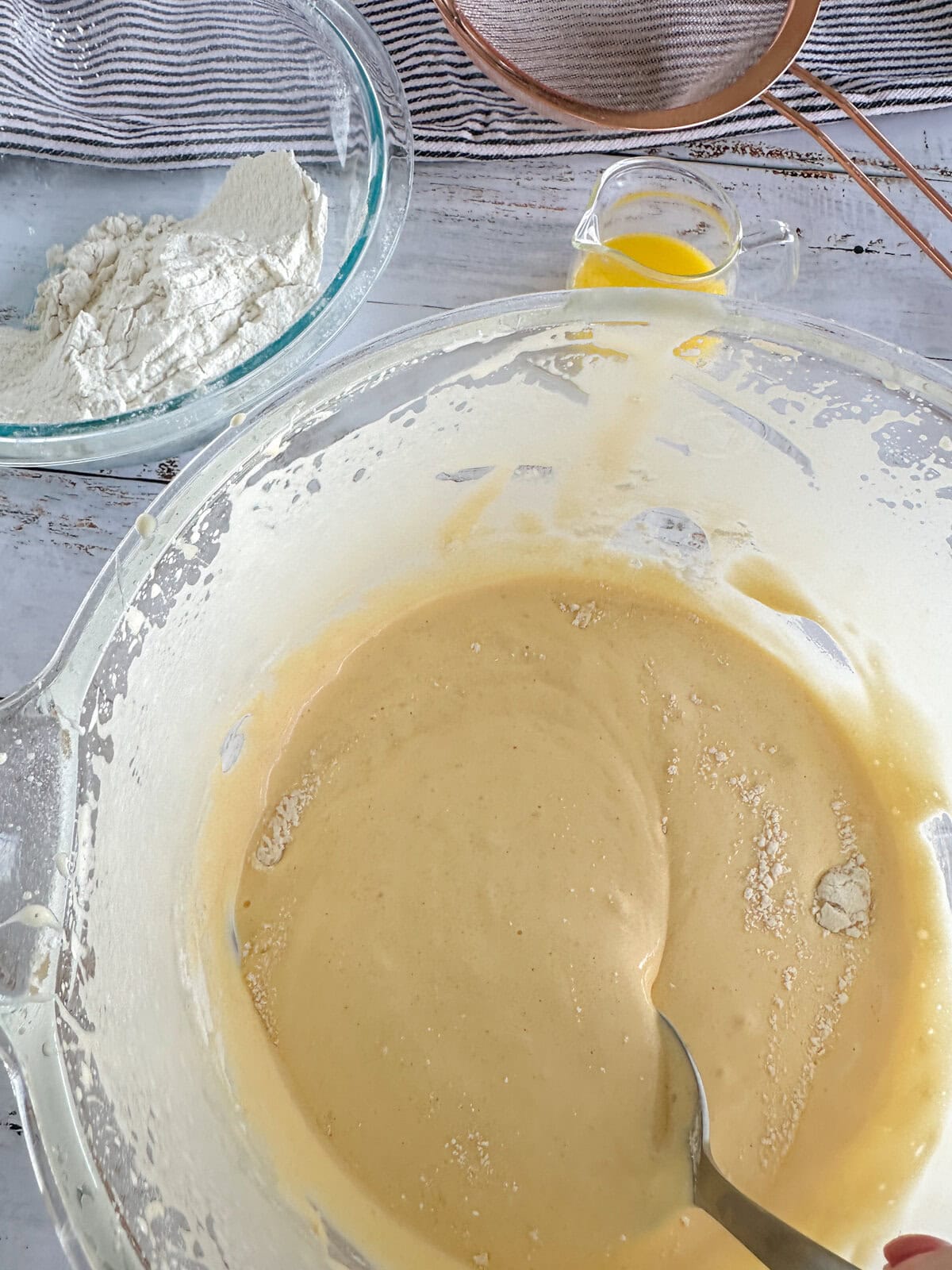
I use a large metal spoon for folding in the dry ingredients. I use a cut-and-fold technique where I cut the spoon through the middle, and fold the edge in, then turn and repeat until the flour is almost incorporated, before sifting in the next amount.
Add the Butter
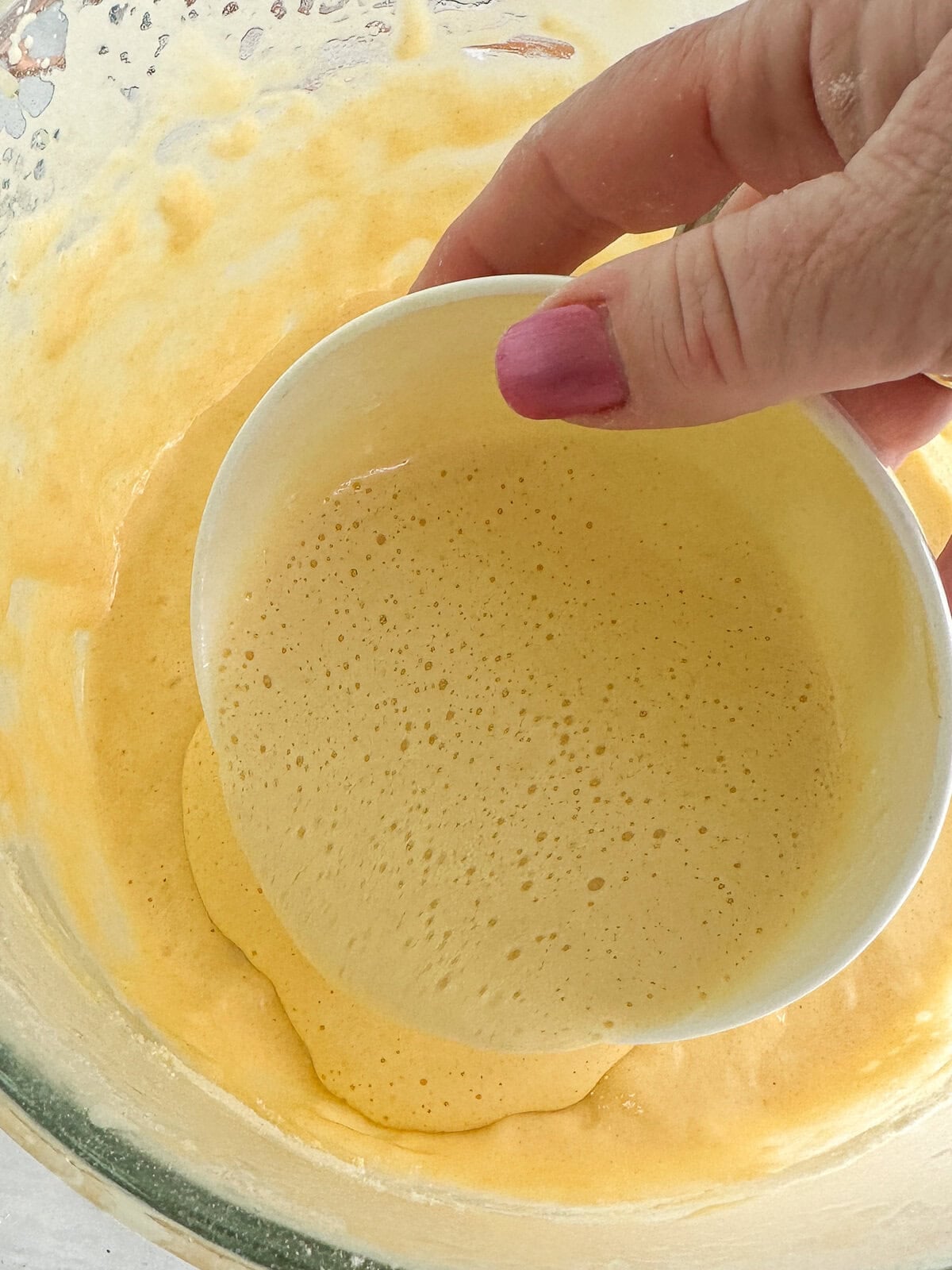
Then I scoop out a little of the batter into a bowl and add the warm butter and water mixture, and lightly combine this, before gently pouring this down into the batter, and lightly cutting and folding again until it has been completely mixed. This helps incorporate the butter without knocking out too much air.
Transfer and Bake
The light folding technique is to ensure you retain as much air in the batter as possible. Then you transfer it to the prepared tin and carefully place it in the oven. Avoid opening the oven door before the 25 minutes are up, then quickly check and close door if needed.
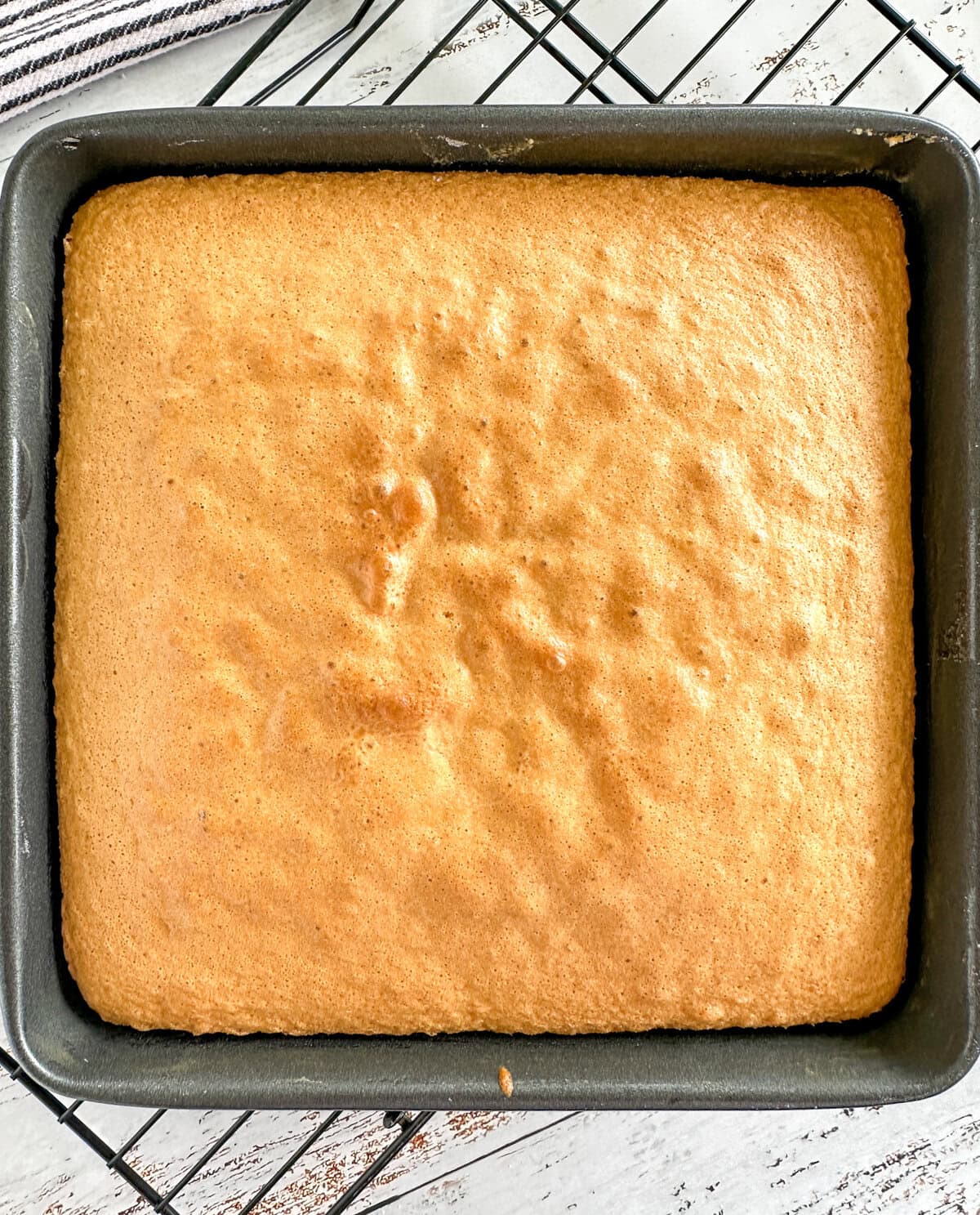
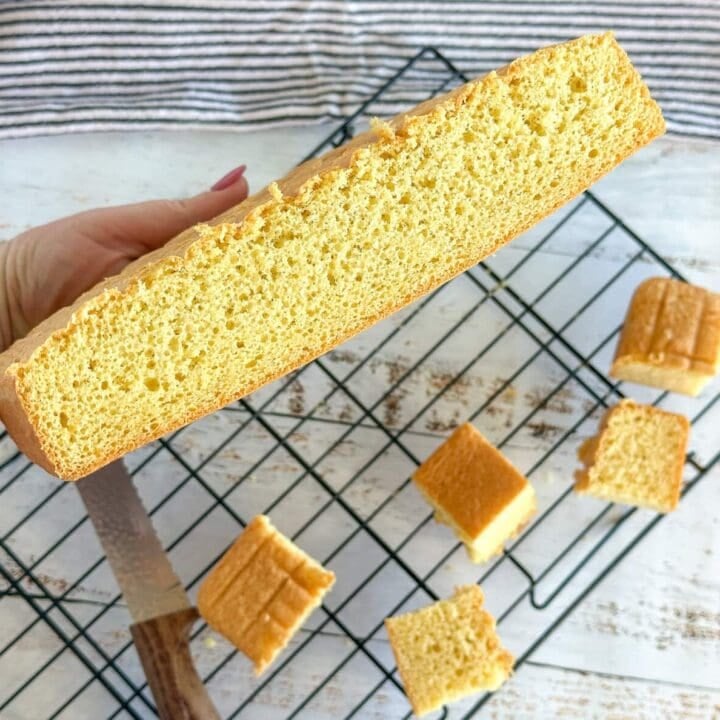
The sponge is cooked once the top is uniformly golden, and the centre springs back to the touch, and a skewer inserted into the middle comes out clean. You may also notice the edges of the sponge are starting to come away from the tin.
Remove it from the oven, and allow it to stand for five minutes. This is so that it begins to settle, but does not become damp from sitting in the hot tin.
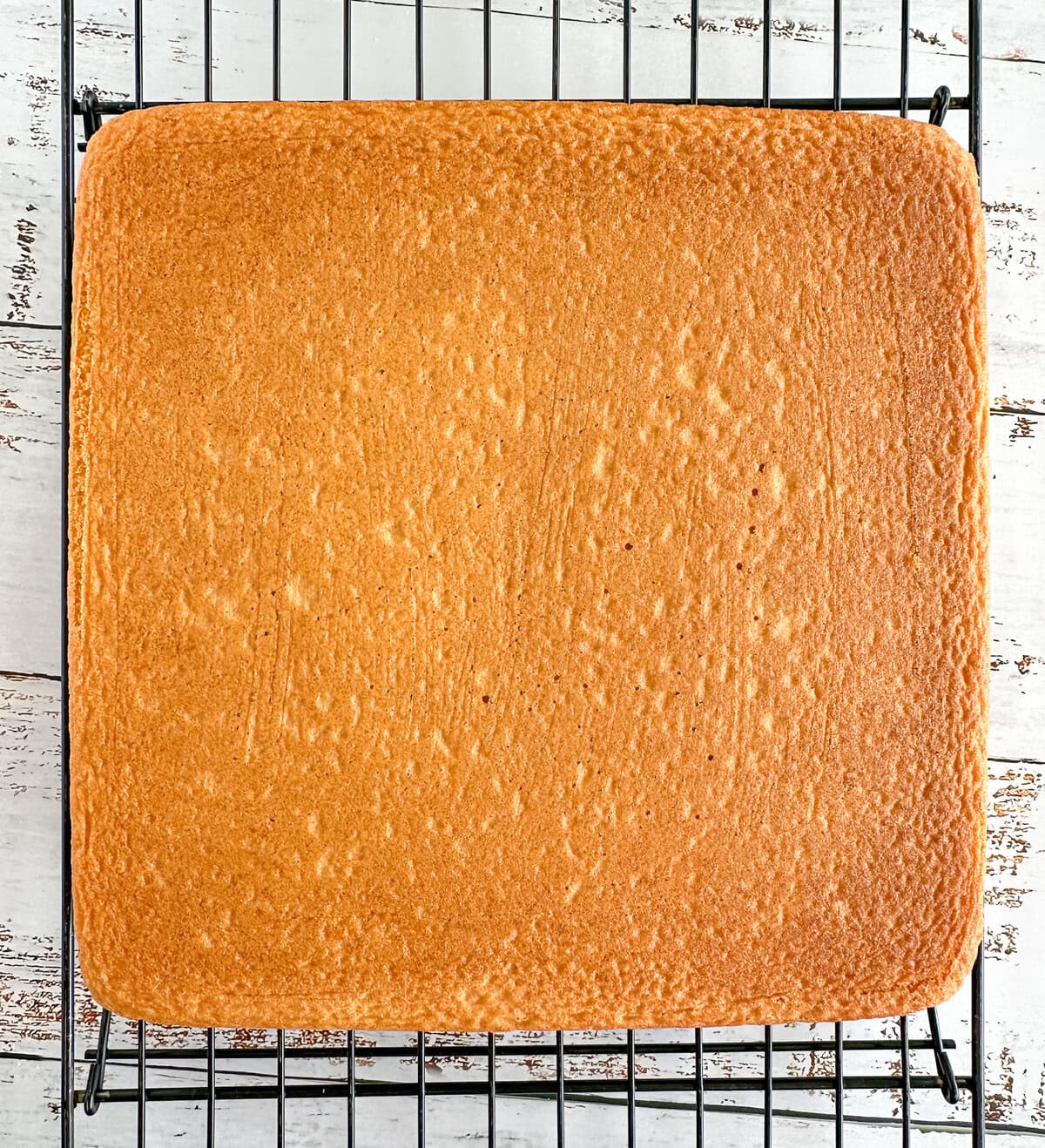
Then place a wire rack over the top and invert the sponge. It should come loose easily if the first tin preparation step was followed well, if not a few taps on the bench usually loosen it.
Making Ahead, Storing and Freezing Sponge Cake
Allow the sponge to cool completely on the bench before covering it well. I leave it at room temperature overnight to work with the next day, as day old sponge is best here.
You can absolutely freeze this sponge. Cool completely, wrap well in plastic wrap then place in an airtight container and freeze for up to 3 months.
How to use this sponge for Lamingtons
Now onto the best bit! The cutting, dipping and eating parts.
I currently have a few variations of lamingtons for you to choose from. Classic like Raspberry Lamingtons and Chocolate Lamingtons, made just like the versions you know and love, then two special ones coming soon, Lemon Cheesecake Lamingtons and Passionfruit Cream Lamingtons. All simple, delicious and achievable.
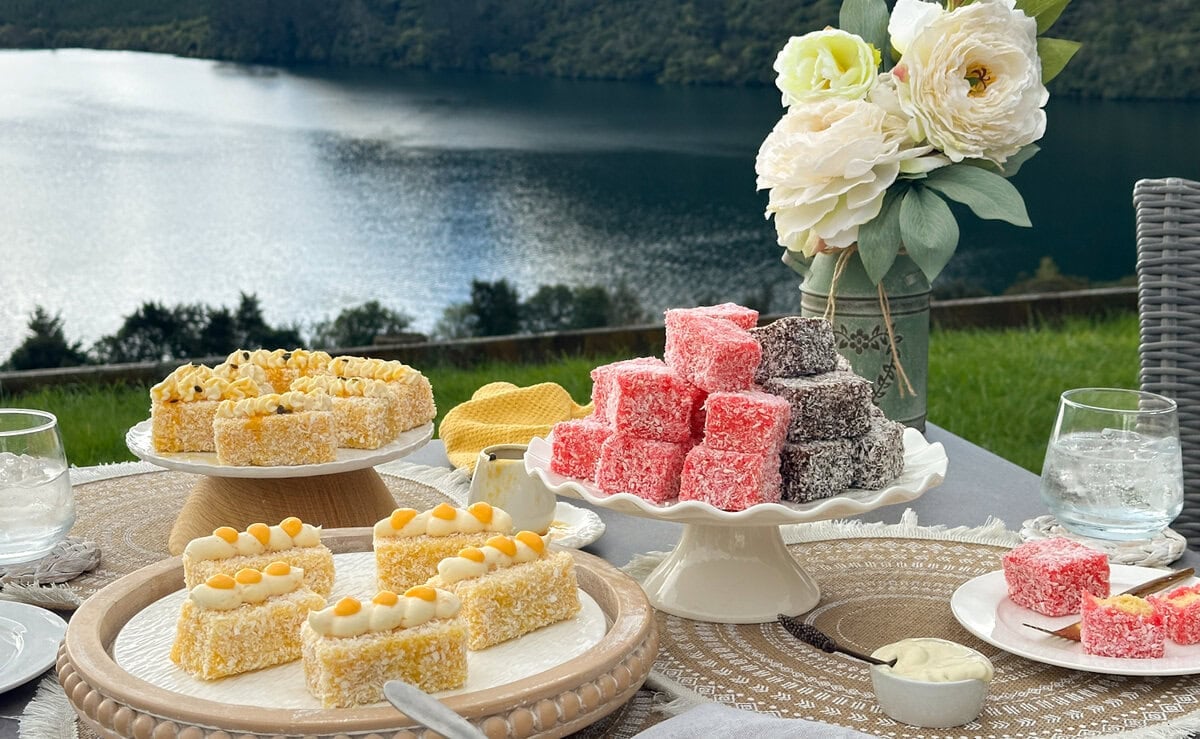
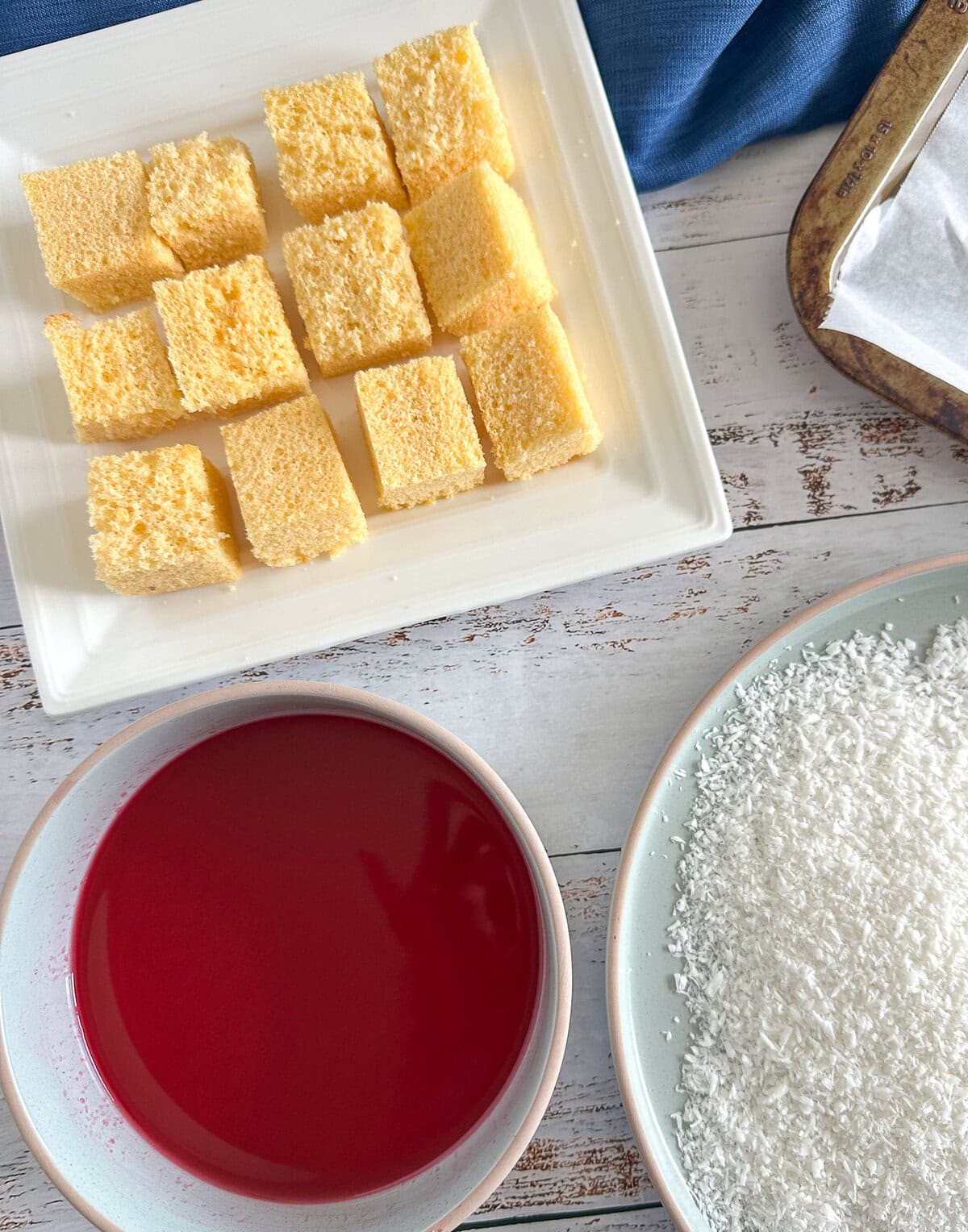
The techniques are all similar. Day-old sponges are best to use as they are sturdier and easy to cut and dip. You can cut into squares or rectangles at whatever size you prefer. I like to cut 25 squares or 15 rectangles from this recipe.
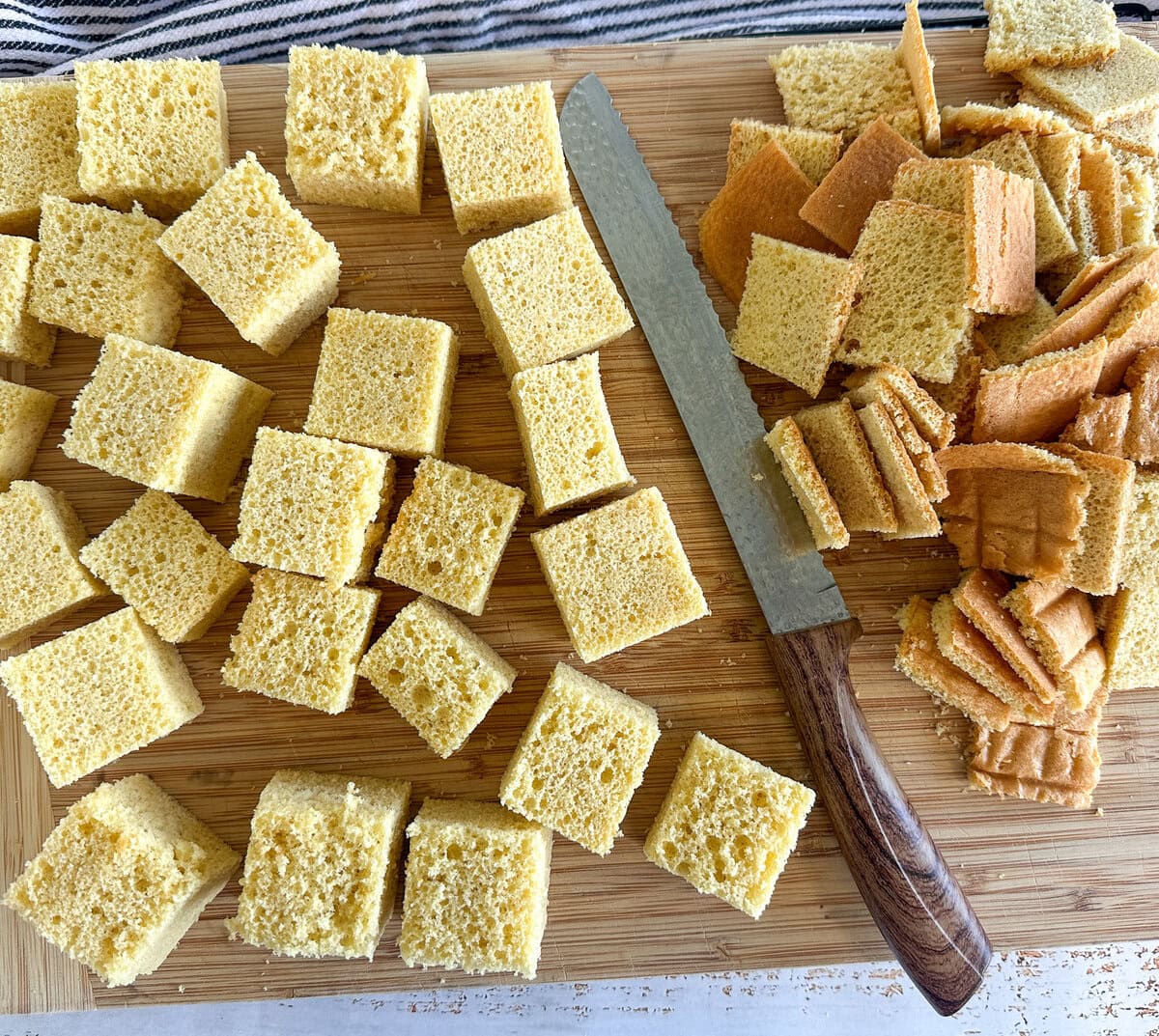
Whether you cut off the crust is up to you, but it does make a considerable difference to how the lamingtons look. It’s quick to do, and ensures they look uniform once dipped. Once I cut them, I pop the cut sponge back into the fridge to firm up slightly, while I prepare the liquids.
I have worked on ensuring the recipes for dipping liquids are easy to follow with the lamingtons getting an even coating without becoming soggy.
Rolling the coated sponge in coconut is the classic finish. This ensures that they are easy to eat and not sticky. If you cannot eat coconut, then consider 100s & 1000s, chocolate hail, or finely chopped nuts or biscuits.
How to use the Sponge for Trifles
As above for the lamingtons, you want to use day-old sponge here. It holds its shape nicely when layered in the dish.
You can use this sponge cut into small squares, rectangles, or if you prefer cut to keep it whole, you can cut it to the size of your trifle bowl and slice the sponge into two layers.
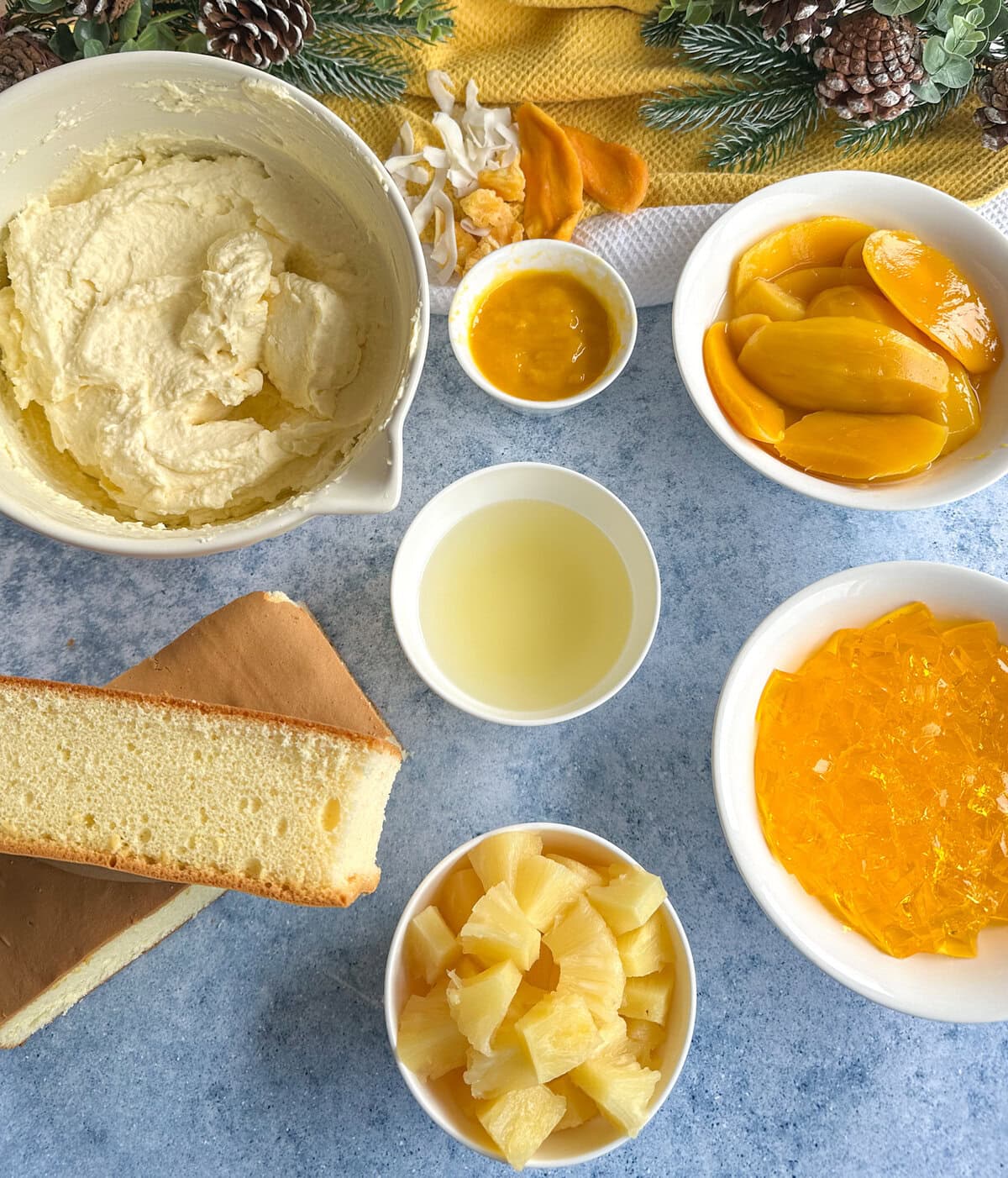
Again, you can remove the crust for a more uniform look, or leave as is. If you choose not to cut off the crusts then, for the neatest finish, place the pieces with no crusts towards the outside of the dish, then the rest internally.
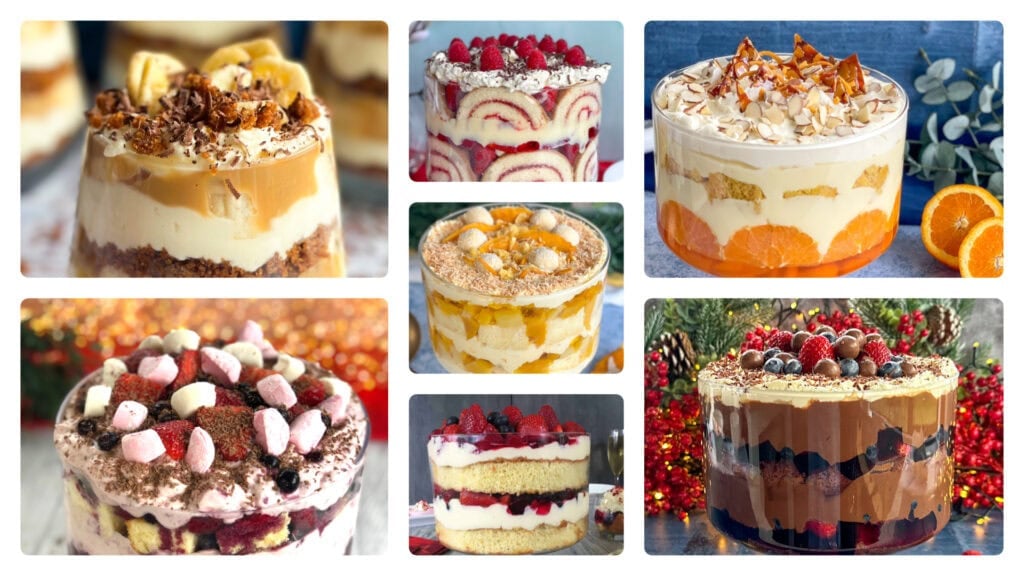
You can check out my collection of delicious trifle recipes here.
My recipe for Sponge Cake for Lamingtons and Trifles
Sponge Cake Recipe for Lamingtons and Trifles
A light delicious sponge cake perfect for lamingtons and trifles. Best made a day ahead.
Ingredients
- 5 large size 7 Eggs, room temperature
- 3/4 Cup (165 g) Caster Sugar
- 1 teaspoon Vanilla Essence
- 125 g Plain White Flour
- 5 Tablespoons (35g) Cornflour
- 1 1/2 teaspoons Baking Powder
- 1/4 teaspoon Salt
- 20 g Butter
- 1/4 cup (60 ml) Boiling Water
Instructions
- Preheat the oven to 180°C conventional bake
- Grease the entire inside of the 23 cm square tin, at least 5.5cm deep, with softened butter using a paper towel in a thin even layer, dust evenly with a tablespoon or two of plain flour, then tap out all excess flour.
- Sift the plain flour, cornflour and baking powder together three times, from one bowl to another through a fine sieve. Add the salt to the sifted ingredients and whisk gently to distribute evenly. Set aside.
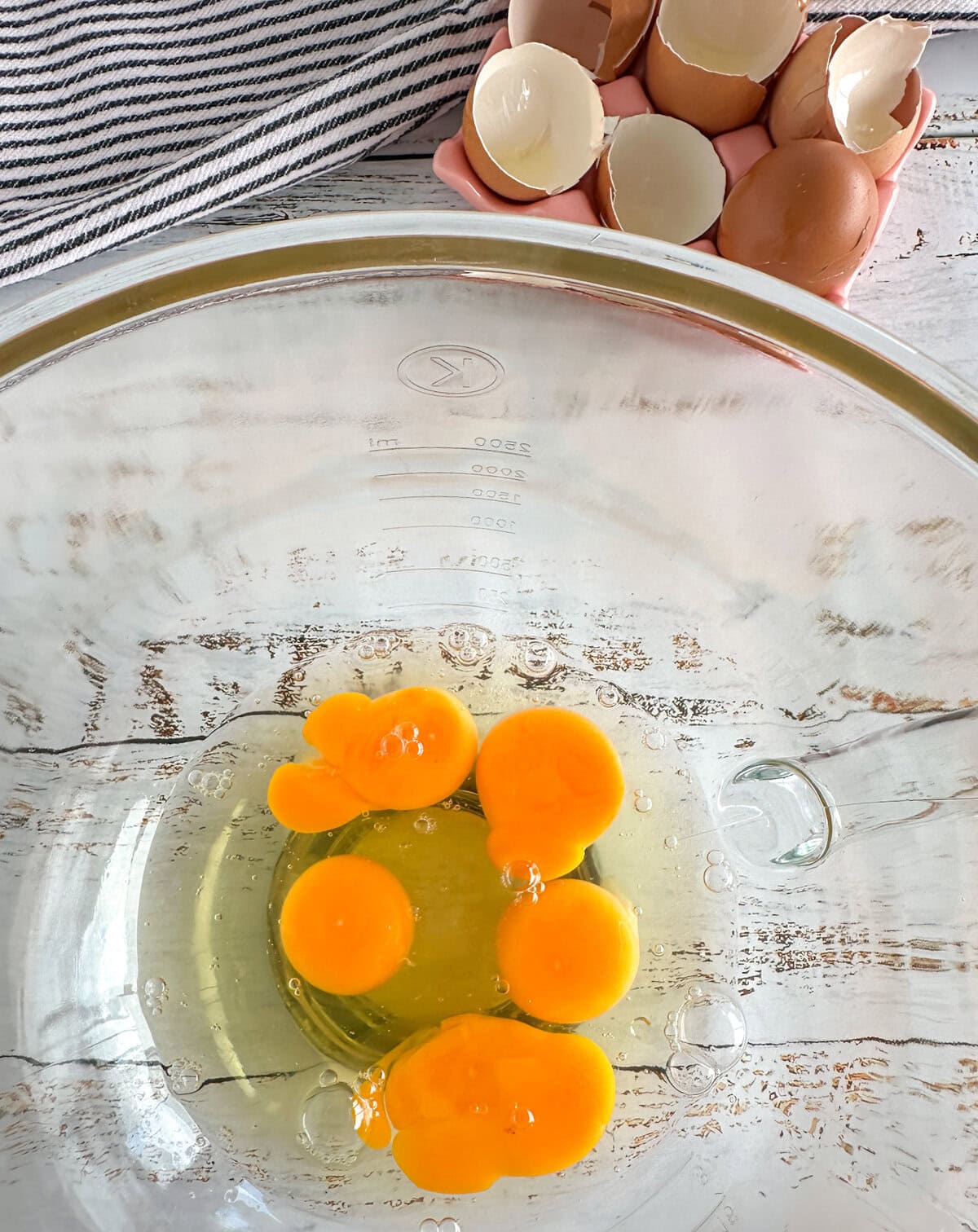
- Crack the eggs into the bowl of a stand mixer or a large mixing bowl. Beat on medium-high speed for 2 minutes, until foamy and increased in volume.
- With the mixer running on medium speed, gradually add the caster sugar, a little at a time over approximately 2 minutes. Then add the vanilla.
- Continue beating on medium-high speed for approximately 3-5 minutes, or until the mixture is very pale, thick and voluminous. When the whisk is lifted, the mixture should fall in a thick ribbon that sits on the surface for several seconds before slowly disappearing.
- Place the butter in a small heatproof jug. Pour over the 60 ml boiling water and stir until the butter has completely melted and set aside, keeping warm.
- Sift approximately one-third of the flour mixture over the egg mixture. Using a large metal spoon, gently cut and fold through until almost fully incorporated.
- Repeat with the remaining flour in two additions until no flour is visible, checking the bottom of the bowl and the spoon for any pockets of flour.
- Take approximately ½ cup of the sponge batter and add it to a small bowl, then pour over the warm butter and water mixture. Gently mix until combined.
- Pour this lightened butter mixture over the main batter. Gently fold through until just combined, taking care to retain as much air as possible and make sure no visible streaks of liquid are left at the bottom.
- Gently pour the batter immediately into the prepared tin, and carefully place in the preheated oven.
- Bake for approximately 25–28 minutes, without opening the oven door during the first 25 minutes. The sponge is ready when it is golden, springs back when lightly pressed in the centre and a skewer inserted into the middle comes out clean. The edges may also be just starting to pull away from the tin.
- Remove from the oven and leave in the tin for only 5 minutes, then carefully invert it onto a wire rack. Allow it to cool completely.
- Once completely cold, store the sponge in an airtight container at room temperature overnight before using for lamingtons or trifles.
- Make ahead and storage: This sponge is ideal made the day before you need it.
- Once completely cold, store in an airtight container at room temperature overnight.
To freeze: Allow the sponge to cool completely, then wrap well in plastic wrap and place in an airtight container. Freeze for up to 3 months. Thaw at room temperature before using.
To make lamingtons: A day-old sponge is easier to cut and handle when dipping. Use it to make my classic raspberry lamingtons, chocolate lamingtons, lemon cheesecake lamingtons or passionfruit cream lamingtons.
To make trifle: Cut the sponge into pieces or layers as required and use in your favourite trifle recipe. See my collection of trifle recipes for ideas.
Notes
How to make Lamingtons from this sponge cake: Try my recipes for Chocolate Lamingtons and Raspberry Lamingtons
Eggs: I use large size 7 eggs, approximately 63 g each with the shell. For best results, have the eggs at room
temperature before beginning.
Make ahead: For lamingtons, I recommend making the sponge a day ahead. Once completely cool, store in an airtight container at room temperature overnight. The rested sponge is sturdier and easier to cut and dip.
Freezing: Once completely cool, wrap the sponge well in plastic wrap and place in an airtight container. Freeze for up to 3 months and thaw at room temperature before using.
Gluten free: For a gluten-free version, see my Gluten Free Sponge Cake for Lamingtons and Trifles recipe.
Nutrition Information
Yield 25 Serving Size 1Amount Per Serving Calories 78Total Fat 2gSaturated Fat 1gUnsaturated Fat 1gCholesterol 39mgSodium 78mgCarbohydrates 14gFiber 0gSugar 8gProtein 2g
JustAMumNZ.com, occasionally offers nutritional information for recipes contained on this site. This information is provided as a courtesy and is an estimate only. This information comes from online calculators. Although justamumnz.com attempts to provide accurate nutritional information, these figures are only estimates.
Frequently Asked Questions
Can I make sponge cake the day before making lamingtons?
Yes absolutely make this the day ahead, in fact this is the method I prefer. It lets the sponge rest and firm up slightly. Day-old sponge is best for lamingtons.
Can you freeze sponge cake for lamingtons or trifle?
You can definitely freeze sponge cake. Once the sponge is completely cold at room temperature, wrap it well in plastic wrap and store in an airtight container for up to three months, until ready to use. Thaw at room temperature before using.
Why is my sponge cake dense or flat?
There can be a few reasons why a sponge turns out dense or flat. Make sure the eggs and sugar are whipped really well until they are pale, thick and have reached the ribbon stage, as this creates much of the air and volume in the sponge. When adding the flour and butter mixture, use a light folding technique to retain as much of that air as possible, while still ensuring everything is fully incorporated. Finally, avoid opening the oven door too early while the sponge is still rising and setting.
How do I know when the eggs and sugar are whipped enough for sponge cake?
Don’t rely on time alone. You’re looking for very pale, thick, voluminous eggs that fall from the whisk in a thick ribbon and remain visible on the surface for several seconds before disappearing.
Can I make this sponge cake gluten free?
Yes, I have developed a lovely gluten free sponge recipe for this. It is lovely and light and tastes great. Follow this link for my Gluten Free Sponge Cake for Lamingtons and Trifles
Do I need to remove the crust before making lamingtons or trifle?
You don’t have to, but I prefer to. Especially for lamingtons, it means they look a uniform colour which is lovely once dipped.
For trifles you can choose to remove it or leave it on, depending on the look you prefer.
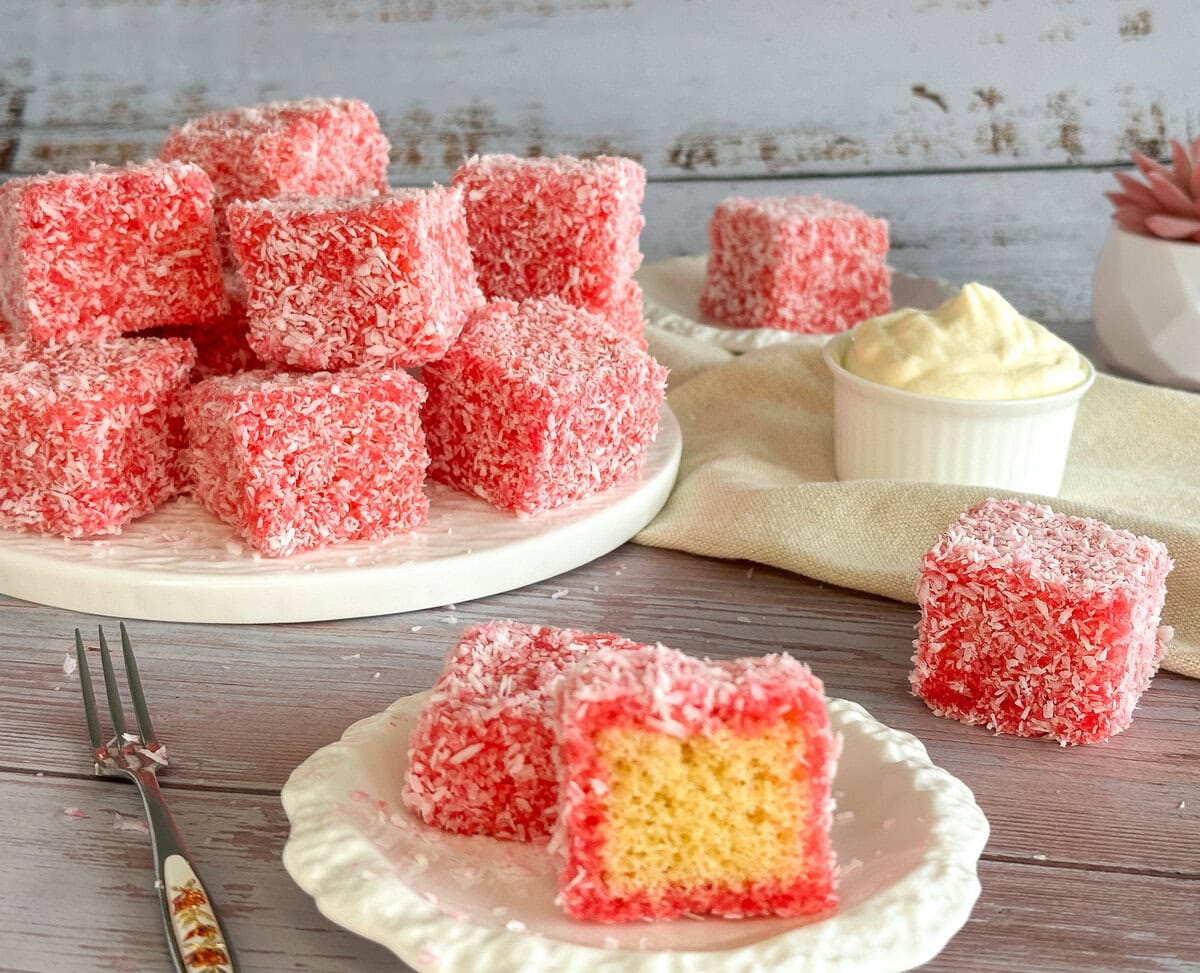
I am so pleased to finally have this recipe to share after wanting a great lamington and trifle sponge for some time!
I cannot wait to see what you make with it. Happy Baking!
Anna xox
Leave a Reply