


Brownies are one of those recipes that seem simple, but can turn out very differently depending on how you make them. Fudgy, cakey, gooey, firm, shiny-topped or soft and rustic, there are so many ways they can go!
If your brownies have ever turned out too dry, too soft, sunken in the middle or just not quite what you hoped for, you’re definitely not alone. The good news is most brownie issues are easy to fix once you understand what’s happening in the batter.
If you’re looking for a broader guide covering common baking problems across cakes, cookies and more, I’ve shared that here.
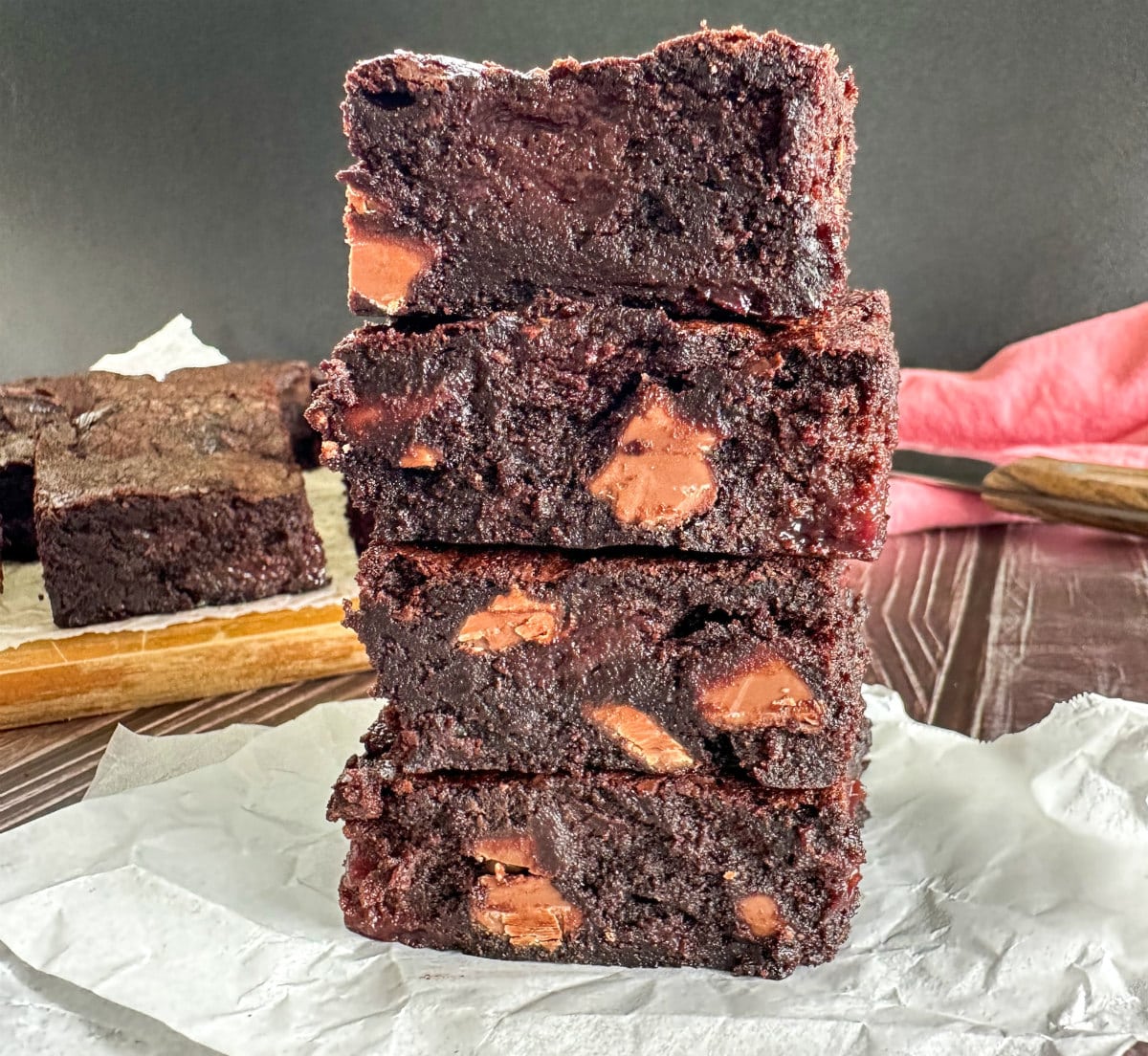
There is no single “perfect” brownie, and that’s part of the charm. Personally, I love my simple, fudgy one-pot brownie made with cocoa powder, but I’ll also explain what creates that shiny, crackly top so many people are after.
You can browse through all my favourite chocolate brownie recipes for inspiration while you are here!
Let’s walk through the most common brownie questions and how to get the best result every time.
What makes a brownie fudgy or cakey?
The texture of a brownie comes down to the balance of fat, sugar, flour and eggs.
Fudgy brownies (my favourite!) have more butter and less flour, which gives that soft, dense texture. Cakey brownies use a bit more flour and often an extra egg, creating a lighter, more sponge-like result.
Neither is right or wrong – it just comes down to what you enjoy!
Why don’t brownies usually use raising agents?
Most brownie recipes don’t use baking powder or baking soda, and that’s completely intentional.
Brownies aren’t meant to rise like a cake. Instead, they get their texture from the balance of ingredients and how they bake, giving that dense, slightly fudgy centre with just a little lightness.
The eggs provide just enough lift to hold everything together without making them fluffy. Adding raising agents can make brownies rise more, but often at the cost of that rich, fudgy texture.
If you prefer a more cake-like brownie, some recipes do include a small amount of baking powder, but for a classic fudgy result, it’s usually left out.
You might also wonder about using self-raising flour. This already contains raising agents, so it will give a lighter, more cake-like result.
If you’re aiming for a classic fudgy brownie, plain flour is the better choice. Self-raising flour won’t ruin them, but it will change the texture quite noticeably.
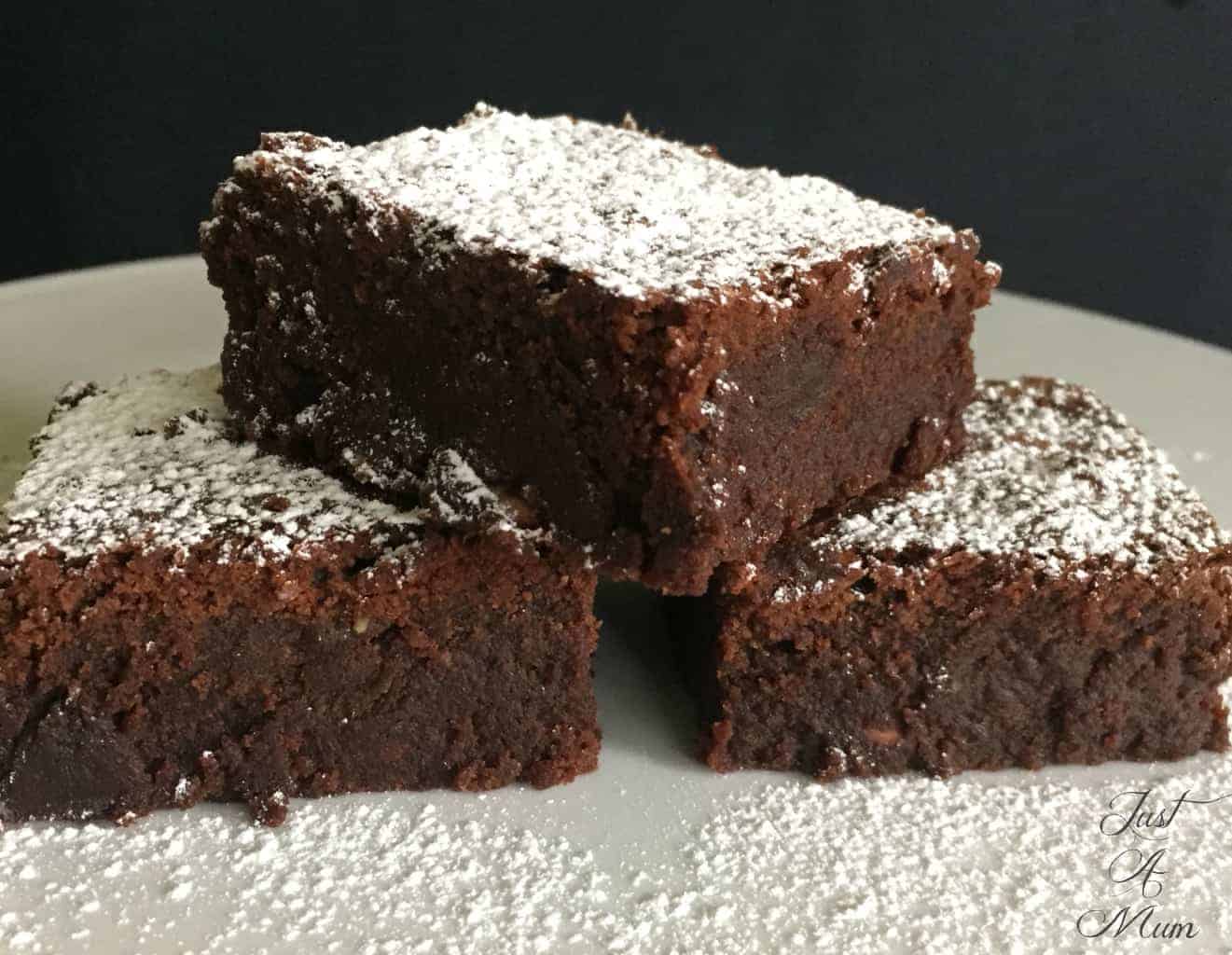
What gives brownies a shiny, crackly top?
That shiny, papery top comes from how the sugar dissolves and rises to the surface during baking.
Recipes that beat eggs and sugar well, or dissolve sugar into warm butter or chocolate, are more likely to create that crackly finish.
In my one-pot brownie, I don’t focus on dissolving the sugar, I prefer a simple, fudgy result instead. So if yours doesn’t have that shiny top, it’s completely fine and still delicious!
What helps brownies turn out well?
Good brownies come down to a few key things:
- the right balance of wet and dry ingredients
- not overmixing once the flour is added
- using the correct tin size
- not overbaking
- allowing them to cool and set before cutting
Once you understand these basics, it becomes much easier to work out what’s going wrong. Don’t worry if they haven’t turned out perfectly before, a few small tweaks usually make all the difference!
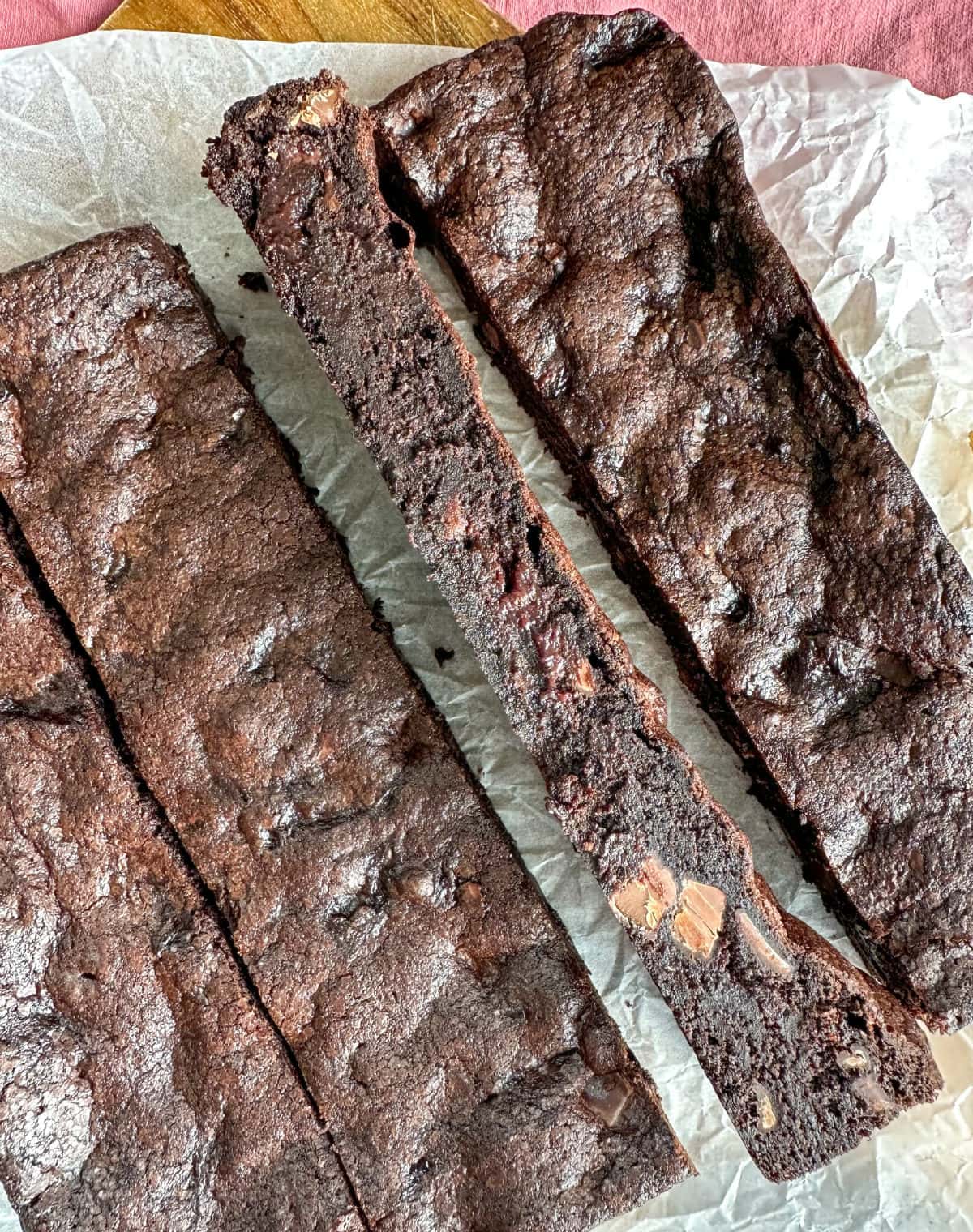
Why are my brownies dry?
Dry brownies are usually the result of overbaking or too much flour.
Brownies should still be slightly soft in the centre when removed from the oven. A skewer or knife inserted should come out with a few damp crumbs, but no wet batter.
If it comes out completely clean, they are likely overbaked.
Why are my brownies too gooey or undercooked?
This is one of the most common brownie questions, and it can be a bit confusing, especially with how brownies are often shown online!
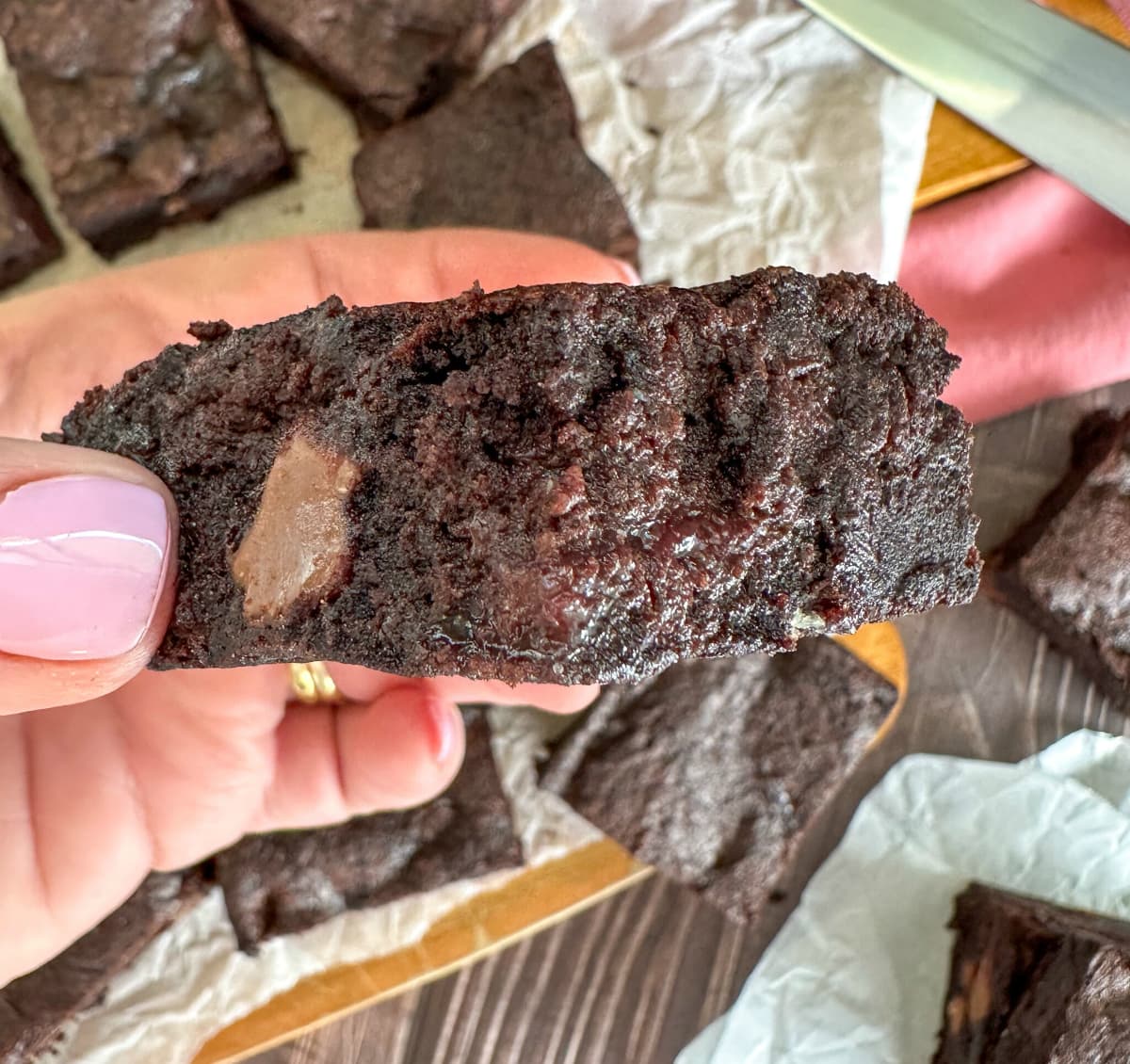
Brownies should be soft and fudgy in the centre, but not raw or oozing. If they’re very wet in the middle, don’t hold their shape when cut, or feel a bit like batter, they just need a little more time in the oven.
A perfectly cooked brownie will have a soft, dense centre, and a skewer or knife will come out with a few damp crumbs, but no wet mixture.
It’s also worth remembering that brownies firm up as they cool, so don’t wait for them to feel completely set in the oven.
You’ll often see really gooey brownies in photos, but these are usually cut while still warm, or slightly underbaked for that look. Once cooled, they should firm up into that lovely fudgy texture.
If you love brownies, you might also enjoy my easy caramilk coconut slice recipe, same idea, just without the cocoa.
Why did my brownies sink in the middle?
This is quite common and usually nothing to worry about.
It can happen if the brownies are slightly underbaked, or if there is a lot of air in the batter which then collapses as they cool.
As long as the texture is still good, they will taste just as delicious.
Why are my brownies crumbly?
Crumbly brownies often have too much flour or not enough fat.
They can also become crumbly if overbaked.
Next time, try slightly reducing the flour or removing them from the oven a little earlier.
Why are my brownies oily or greasy?
This can sometimes happen, especially with cocoa-based brownies.
You might notice a slight oily layer on top or around the edges. This is usually due to a little too much butter, or the mixture not being fully combined before baking.
It can also depend on the cocoa powder used, as some release more fat than others.
The good news is they will still taste lovely! Next time, make sure the batter is well mixed before baking, and if it continues to happen, you can slightly reduce the butter.
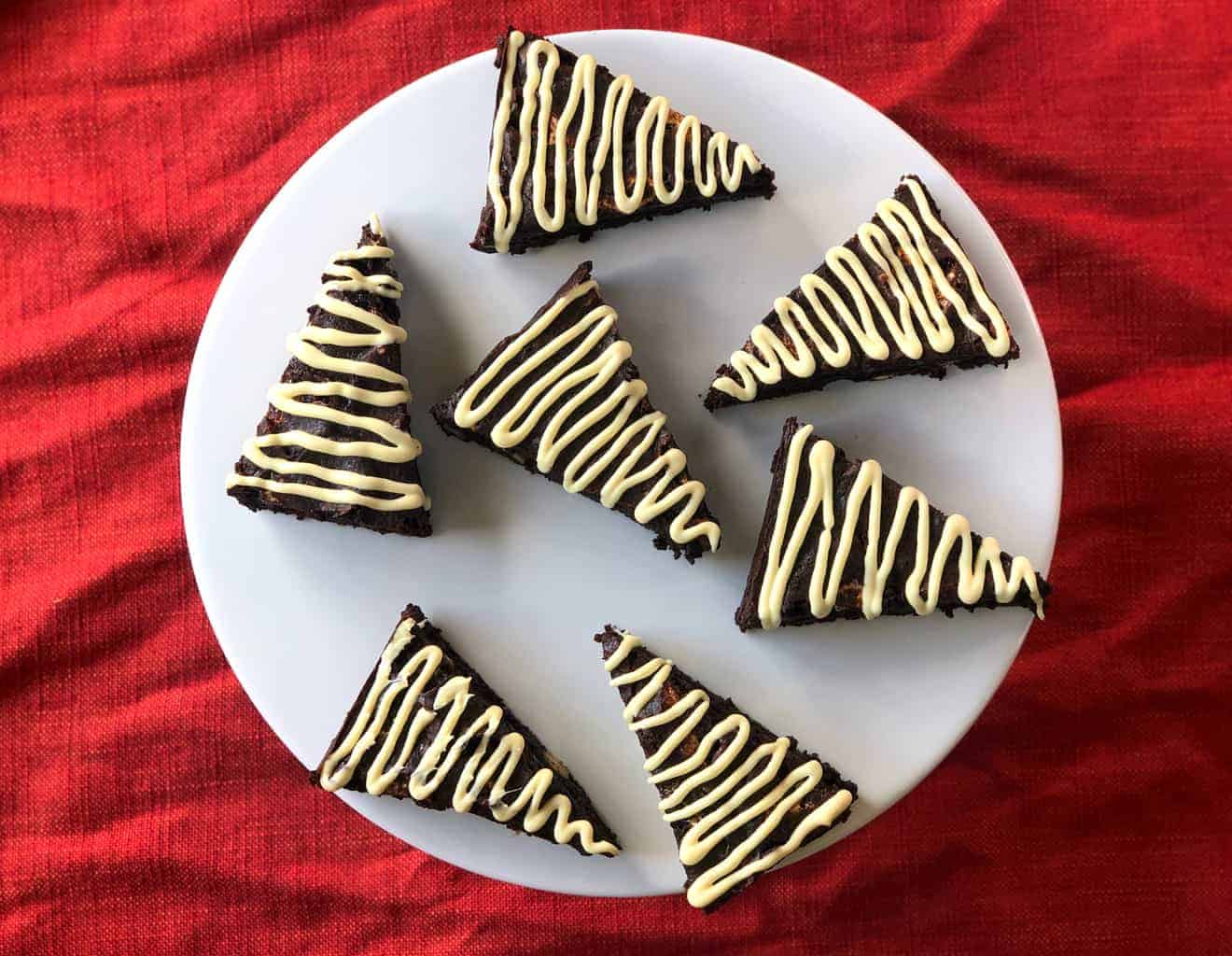
The recipe above is my rocky road brownie – delicious flavours of a rocky road in a soft and fudgy brownie – what’s not to love!
Should I use cocoa powder or chocolate?
Both work beautifully, just in different ways.
Cocoa powder gives a deeper chocolate flavour and a slightly firmer texture, this is what I use in my one-pot brownie and I love how simple it is.
Melted chocolate creates a richer, softer brownie and is often used in recipes aiming for a more indulgent texture. Like this version of Nigella Lawsons Triple Chocolate Brownie.
Can I add extras to my brownie?
Absolutely, this is where brownies get really fun, and you can make them your own.
There are so many lovely additions you can fold through a basic brownie batter, but it’s worth knowing that they can change both the texture and baking time slightly.
Chocolate chunks and chips
Adding chocolate chunks or chips (especially white chocolate – my favourite!) gives little pockets of melted chocolate through the brownie, which is just delicious.
Because of the extra chocolate, the brownie can take a little longer to bake and may feel softer in the centre at first. This is completely normal, it will firm up as it cools.
Fruit additions
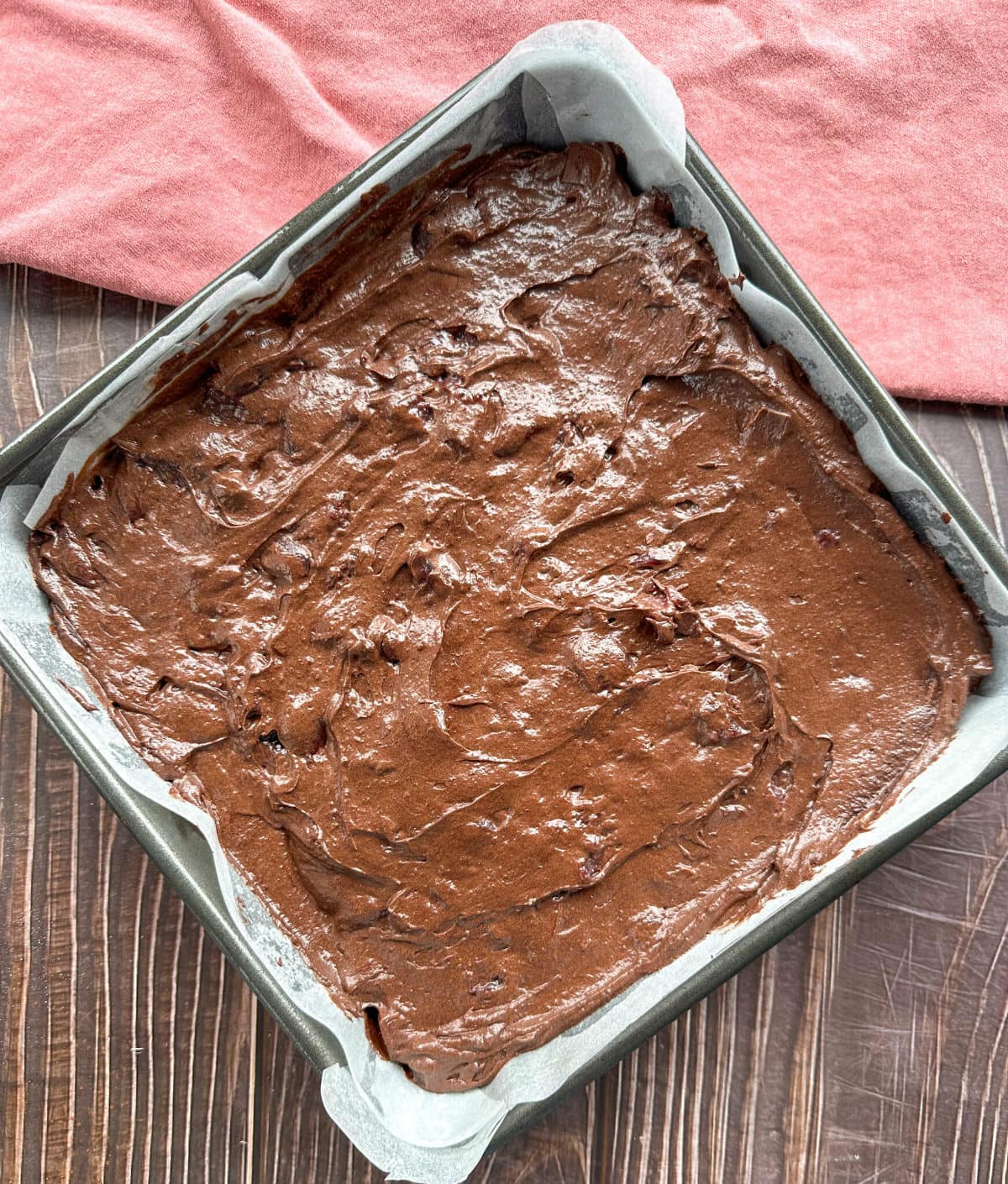
Cherries, raspberries or other soft fruits can be a lovely addition and add a nice contrast to the richness.
Keep in mind that fruit releases moisture as it bakes, which can make the batter slightly looser and the finished brownie softer. You may find they need a little longer in the oven, and they can be more delicate when cutting.
This is lovely in something like my cherry chocolate brownie.
Nuts and other additions
Nuts, caramel pieces or even a swirl of peanut butter can all work beautifully. These tend to hold their shape, so they don’t affect the structure as much as fruit, but they do add texture and richness.
A good guide is to fold additions through gently and not overload the batter. Too many extras can make brownies harder to set and more difficult to slice neatly.
Once you’ve made a brownie a few times, it becomes much easier to experiment and adjust based on what you enjoy and what you have on hand.
Does tin size matter?
Yes, tin size makes a big difference!
If your tin is too large, the batter will spread too thin and the brownies may overbake or turn dry. If it’s too small, they may be too thick and undercooked in the centre.
Using the recommended tin size helps everything cook evenly.
Salted or unsalted butter?
Either works perfectly well.
I always use salted butter because that’s what I have on hand. If using unsalted butter, just add an extra small pinch of salt to balance the flavour.
How do I avoid overmixing?
Once the flour is added, mix gently and only until combined.
Overmixing can develop gluten, which makes brownies more cake-like and can cause them to rise more than you want.
In my one-pot brownie, I keep this step very simple and mix just enough to bring everything together. This helps keep that soft, fudgy texture rather than a lighter, cakier result.
I mix the eggs, sugar and butter super well, but the final stage is just a light mix to bring it all together.
How long should I cool brownies before cutting?
Brownies are much easier to cut once fully cooled and set.
For the neatest slices, I often leave them until the next day. This allows them to firm up properly and makes a big difference to how cleanly they cut. Once cooled in the tin, I remove them, wrap well and leave them on the bench to slice the next day.
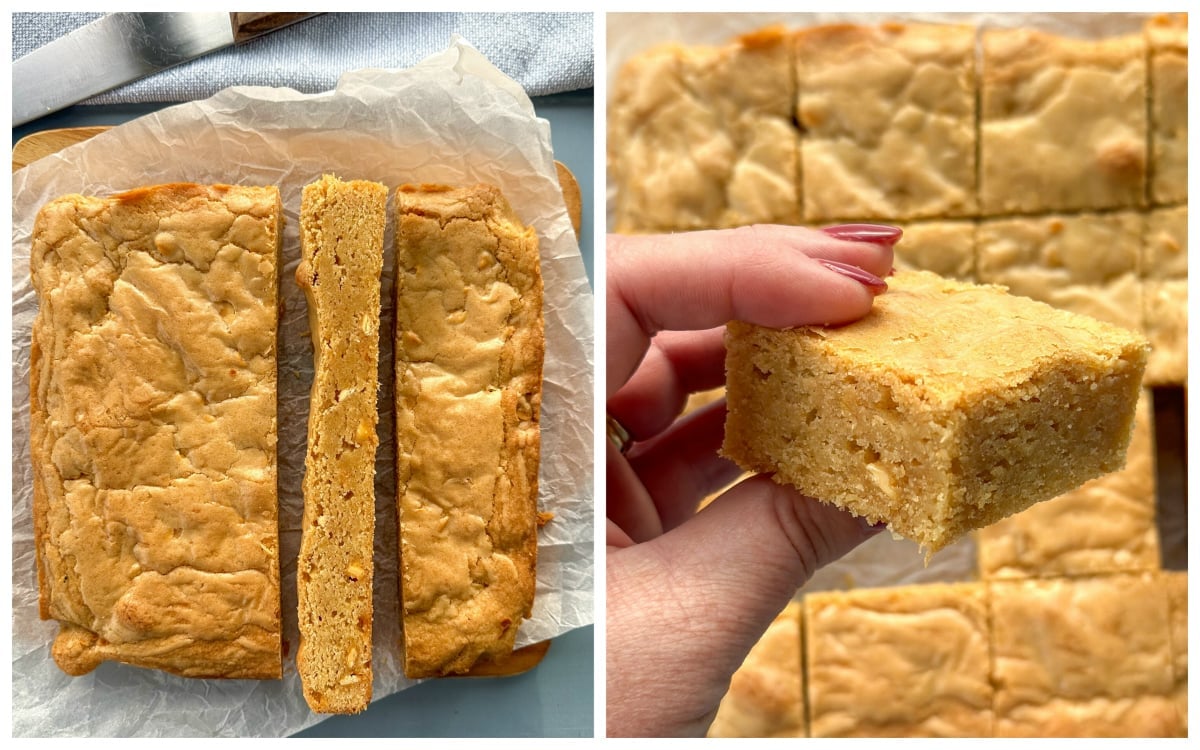
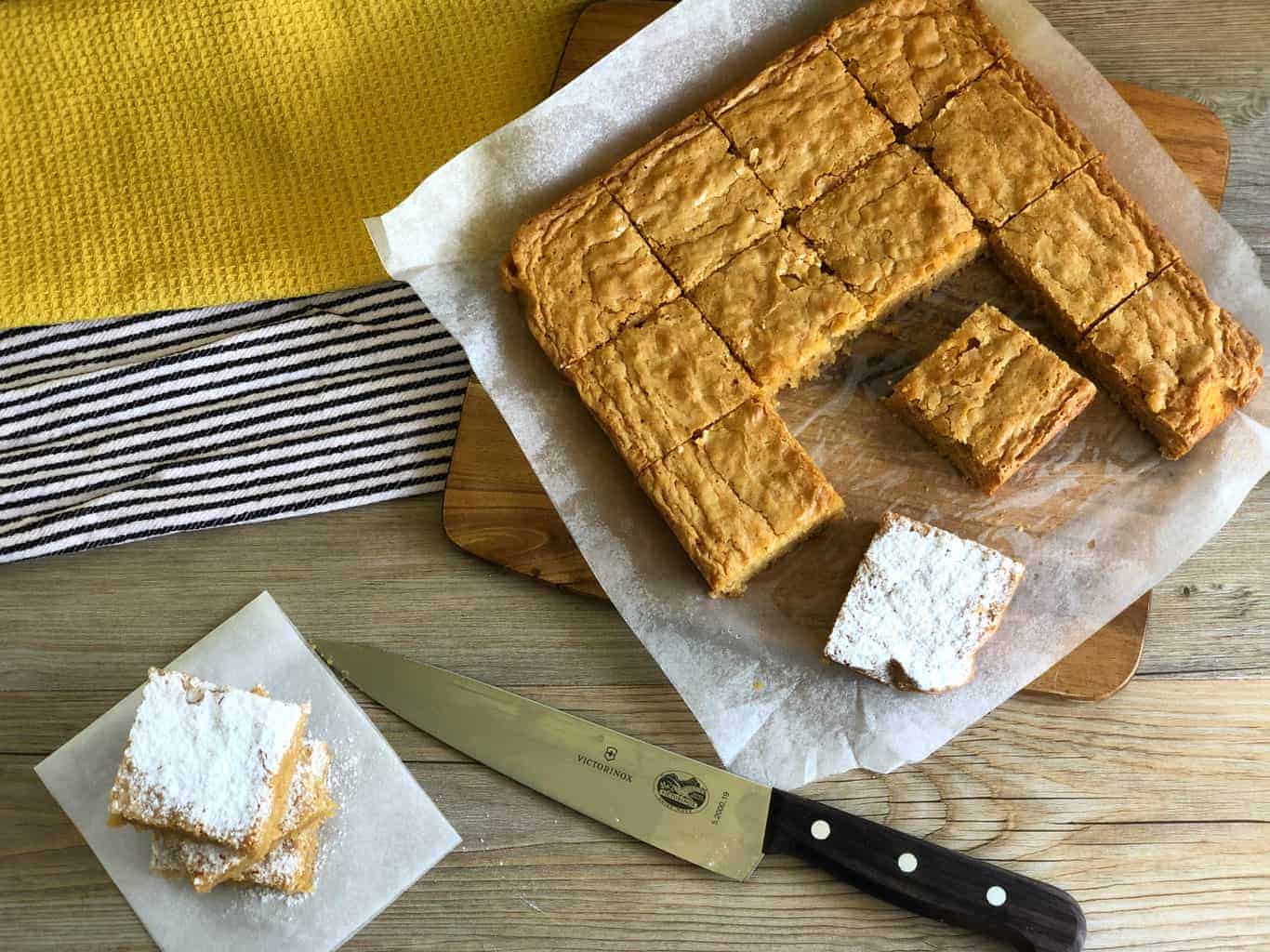
The perfect blondie is shown in this photo above, check out my recipe for lots of great tips.
How do I cut brownies neatly?
Use a large, sharp, thin knife and wipe it clean between cuts. For extra neat edges, you can warm the knife in hot water, dry it, then slice.
Cut with steady pressure rather than sawing for the best result.
Can I freeze brownies?
Yes, brownies freeze so well. I often make two brownies so I can freeze one for another day.
Store them in an airtight container with baking paper between layers or wrap well in plastic wrap then foil. Freeze for up to 2–3 months.
Defrost at room temperature or in the fridge, and they’ll be ready to enjoy again.
Common brownie mistakes at a glance
- Dry brownies — overbaked or too much flour
- Too gooey — not baked long enough
- Sinking — slightly underbaked or too much air
- Crumbly — too much flour or overbaking
- No shiny top — sugar not dissolved (but still delicious!)
If you enjoy baking slices as well, you might find my no-bake slice troubleshooting guide helpful too.
FAQ – How to fix!
Brownies are usually dry from overbaking or too much flour. They should still have a few damp crumbs when tested, not a completely clean skewer.
A shiny top comes from how the sugar is dissolved and beaten into the batter. If your brownies don’t have one, it’s completely fine and doesn’t affect the flavour.
Insert a skewer or knife into the centre. It should come out with a few damp crumbs but no wet batter.
Yes, brownies freeze very well. Store in an airtight container and defrost before serving.
They likely need more baking time. Keep in mind brownies firm up as they cool, so look for moist crumbs rather than a fully set centre.
Self-raising flour will give a lighter, more cake-like brownie because it contains raising agents. For a fudgy result, plain flour is the better option.
Final thoughts
Brownies are one of those recipes that can be made in so many different ways, and that’s part of what makes them so good.
Whether you prefer a simple one-pot version like I do, or a richer chocolate-based recipe, there’s no single “right” way to make them, just the version that works best for you.
With a little practice, you’ll quickly get a feel for what you like and how to get the texture just right every time!
If you have a question or a troubleshooting issue you’d like help with, feel free to leave it in the comments below.
Happy Baking!
Anna xo
Leave a Reply